March Feature Plant: Hellebore

Hellebores (Hellborus) are commonly known as Easter Rose or Lenten Rose given their blooms are an early springtime staple in gardens in Coastal BC.  The toothed-green leaves are leathery and some can stay evergreen through a mild winter.  Damaged leaves are quickly replaced in late winter to early spring adding a necessary lift to garden this early in the year.

Hellebore blooms come in variety of colours including green, white, yellow, red, black, and many variations of pink and purple.  Double blooms or single, spotted or freckle-free, the best way to show off the flowers is to float them in a bowl of water.

In the garden the flower heads hang upside-down where their true beauty cannot be completely appreciated.

To propagate, divide the clumps after flowering, in early spring or late summer.  Hellebores can be grown from seed and will self-seed but do not come true to type.  With so much variety out there it’s quite fun to grow your own seedlings be surprised at what will pop up.

More information on Hellebores can be found at Hellebores.org.

For 2012 I will be featuring a different plant of the 15th of each month for Garden Blogger’s Bloom Day.  I have done more than a year of posting for #GBBD and as it’s not greatly different than in previous year’s at the same time it will allow me to show off some great blooms and favourite plants.

Share

Weekend Handmade: Trivets to Stepping Stones

We had a great start to Garden Therapy Book Club with lots of readers visiting and commenting on the recipes from A Green Guide to Natural Beauty + Mango Citrus Body Butter Recipe and Hemp & Honey Lip Balm.  The selection is a book that I’ve been very excited about reviewing: Weekend Handmade, by Kelly Wilkinson.

On the jacket, it describes Kelly Wilkinson as a “craft designer and journalist” with projects appearing in many stylish blogs like Apartment Therapy and Design*Sponge.  Since the title and cover reminded me of the Weekend Project that I post here each week, I was pretty jazzed to dig in.

[Read more...]

Share

Painted Mason Jar Planters + Shamrocks

Purple and green Oxalis planted in painted mason jars make a modern arrangement for this St. Patrick’s Day.

St. Patrick’s Day typically reminds folks of leprechauns, green beer, Ireland, and shamrocks: the symbol seen on green-felt fedoras.  But I’m a plant nerd so I think about the shamrock from a botanical point (and I try not to remember those nights drinking green beer).  The symbol of Ireland is the three-leaf old white clover, Trifolium repens, which is common in North America and Europe in grassy areas as well as a pasture crop.  I fondly remember summer days as a child searching for a lucky four-leaf clover lying in park grass.  While many launch a year long fight to get clover out of their lawns, I’m happy to leave it blooming for the bees and give the lawn a rich green colour.

There are a few other three-leaf herbaceous plants that share the Shamrock moniker my favourite being Oxalis.  Native to South America and Africa, this genus of over 500 species are often grown as ornamental plants in home gardens or as houseplants.

Oxalis in my garden in tucked in shady woodland areas where it generally hides from the camera.  To get a few better shots and really enjoy the beauty of the plant, I picked up a few from the garden centre to use in my spring arrangements.

Oxalis regnellii is typically grown in this zone (7-8) as a houseplant due to its vulnerability to frost.  Pale lavender to white flowers bloom regularly on healthy plants given plenty of light but away from direct sunlight.

With Oxalis regnellii ‘Atropurpurea’, the blooms are hardly worth considering when compared to the dark eggplant foliage, often with brighter purple centre leaf margins.

Inspired by the colour palette provided by the two false shamrocks, I created a St. Patty’s day floral arrangement using painted mason jars as planters and as a case for some deep purple tulips.


Painted Mason Jar Tutorial

Materials:

  • Mason jar(s)
  • Latex house paint
  • Craft paint
  • Foam paint brush
  • Flowers / plants


Directions:

This is a simple project that I have seen done with spray paint.  I chose to tint some leftover latex trim paint as : a) I had some, b) I wasn’t keen on the fumes from the spray, and c) I wanted more control over the colour.

Simply mix up the colour that you want by added craft paint into the latex pain in a yogurt container. Mix really well then pour a little into your mason jar.  Use the brush to paint the inside evenly and leave to dry.  Apply a second coat if necessary.  One coat is shown here.

To make into a planter, fit a plastic nursery container containing your plant onto the top.  Ensure there is a little lip holding it on the edge so you can remove it when necessary.


To make a vase, insert a thin glass vase into the painted jar.


Choosing interesting shapes and patterned jars will add even more interest to the project.  I like the simplicity of them on my fireplace mantle where they contrast with the painting.


It has also been quite fun to watch the Oxalis “go to sleep” at night, or rather the leaves droop down  as a result of nyctinasty, a plant’s chemical response to the onset of darkness that causes the leaves to tuck in for the night.  It gives these guys a bit of personality which may leave you unconsciously whispering at night as to not disturb them.


Thanks for visiting this weekend’s project which will be added to these link ups.

Share

Mason Jar Sprouts: Mung Beans and Green Peas

Sprouting is a quick and easy way to grow some nutritious, crunchy veg to add to your diet in the winter months.  I’ve previously shared how much I love using  my automatic sprouter but it’s just as easy with a mason jar and a windowsill.   While I like my automatic sprouter for masses of alfalfa, fenugreek, clover, radish, and broccoli sprouts that grow tall and last for weeks in the tray, mason jar sprouting is a good choice for crunchy beans and peas.  If you start today you will be adding them to the salad bowl or wok in about 4 days.

Many places sell a bean mix that contain a variety of different lentils, peas and beans.  I used mung beans (these are the beans that sprout the long white bean sprouts you typically find in Asian food) and green peas as I like the combination of starchy and sweet favour.  Plus they both sprout in 3-4 days so they are compatible for timing.

Fill a 1L mason jar 1/4 of the way with dried organic beans/peas.  Cover them with water and leave on your counter to soak overnight, 8-12 hours.  Cut a square of cheesecloth and secure it tightly with a canning jar ring.  Strain off water and set back down on your counter.  Rinse the jar contents now 4 x per day, straining off all the liquid.

After 4 days or so, the contents of the jar sprout and jar will start to fill up – it’s time to eat them!  Add raw to salads and sandwiches or toss into stir-fries and soups.  I have also heard of people adding them to smoothies although I’m not tripping over myself to try that one.  Any other ideas on how to use these sprouts in recipes?

See this post featured at At the Picket Fence’s Inspiration Friday and North Coast Gardening’s Miscellany Monday.

Update: I buy my seeds from West Coast Seeds but you can also find them online here.

Share

Garden Therapy Book Club: Reviewers Wanted

~

UPDATE: The reviewers have been chosen for the first book.  Please read the full post (or click “continue reading” if you see a break).  At the end you will find out how to keep in touch with Garden Therapy so you can be the first to hear about the next call for reviewers.

~


Would you like to participate in Garden Therapy Book Club?  I’m looking for reviewers to read  the selected book, try a project or concept, and share it on Garden Therapy.  The goal is to get some rich discussion and different perspectives on popular gardening and garden-related craft / project titles.  

[Read more...]

Share

Seed Starting Containers: The Real Dirt – Part 1

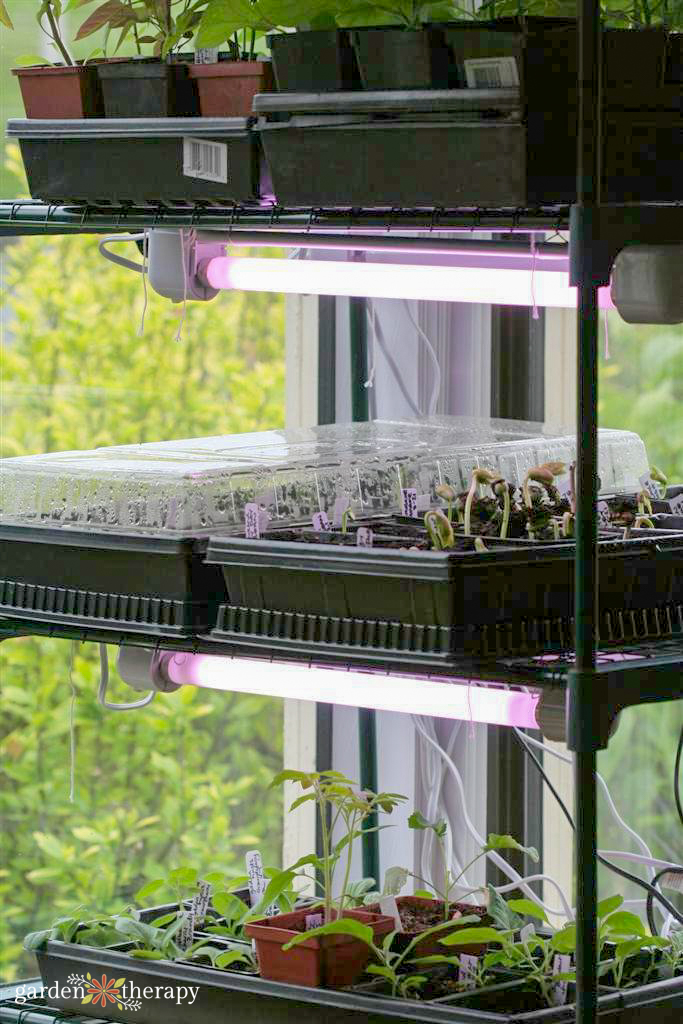
The weather may be warming a bit and it’s been many months since we had our green thumbs in the soil so it’s no surprise that folks are just itching to get seeds started.  I’m hearing about or seeing a lot of different seed starting blog posts floating around the web, from rookies who picked up a kit at the local hardware store to seasoned pros with pretty sophisticated grow ops (no, not that kind).  I’d like to share my experiences with all those super-adorable containers you can make at home (Part 1) as well as some thoughts on the store bought stuff (Part 2).  So here goes, the good, the bad, and the ugly of seed starting containers.

Note: for more information on the whole process of seed starting, check out Seed Starting 101 for the basics.  The following is more in depth on only one of the topics covered briefly in that post.

Homemade Containers

You absolutely, positively, do not need to BUY anything to be successful at seed starting.  Well, besides your seeds (if you haven’t saved your own) and some great sterilized seed starting mix, you can find most of what you need around the house.  Not every oh-so-cute Pinterest-worthy repurposed container gives your seeds the best start though.  And some are just plain time consuming.  Here are the facts so you can choose what is right for you.

Newspaper Pots

These wildly popular little containers can be easily made but cutting strips of newspaper and rolling it around a can, glass, or a fancy-dancy pot maker to make cheap little starters.  Make sure the paper you choose uses a non-toxic soy based ink, especially when growing veggies starts.  Newspaper is biodegradable so you can plant your seedling out in the garden in the newspaper pot and it’ll break down naturally from the bacteria and other organisms in the soil.

Pros: cheap, readily available, plantable pot breaks down easily

Cons: can be flimsy when wet, can’t bottom-water delicate seedlings, time consuming to make many


Toilet Tissue Roll Pots

These pots are a bit sturdier than the newspaper pots and again readily available. To make, cut tissue roll in half, then cut four ½” long slits on the bottom of one end, equally spaced to make 4 flaps you will fold over like closing a box.  In theory the cardboard will break down in the soil so they can be planted out like the newspaper pots BUT not all soil is equal.  If your soil doesn’t have the necessary elements to break down this cardboard quickly the roots will not be able to spread and the plant will suffer.  If you do plant them in the ground be sure to plant the whole container, as if the lip stays above soil it can wick moisture away from the roots.

Pros: cheap, readily available, sturdy, hole in the bottom for drainage

Cons: time consuming to make many, too small to be useful for most seedlings, will likely need to be removed when planting.


Egg Shells and/or Egg Cartons

These are so adorable aren’t they?  Using a cardboard egg carton filled with soil giving 12 little cells to start seeds they you just rip up and plan in the garden like the toilet tubes.  And the egg shells couldn’t be more precious.  HOWEVER…I won’t even do a pros and cons list on them because that’s it for pros (cute) and never mind that you’ll have to remove the seedling from that shell and crush it before it hits the soil, they are just too darn small.  For both the carton and the shell you will have to delicately extract that little seedling before it has its true leaves and plant it in a bigger, deeper container.  I say, why not just start with a bigger container and save Mr. Seedling the stress?

Yogurt Containers

They don’t have to be yogurt (shown here are cream cheese containers) but you get the picture. This is the equivalent of the plastic nursery pots.  Just punch a few drainage holes in the bottom and Bob’s your uncle.  My only suggestion is to check your plastic for food safety to make it isn’t toxic to yourself or your plants.

Pros: cheap, readily available, sturdy, drainage holes for bottom watering

Cons: Unless you are fairly new to gardening, you probably have more nursery pots than yogurt containers, not all plastic is safe to reuse

Plastic Salad Containers

The box that you buy pre-washed baby greens in will make a lovely container.  As will a chicken dome, or a cake tray.  Anything that has a bit of a bottom on it and a wonderful clear plastic lid will create a mini greenhouse akin to what you can buy in retail.  Cut a few holes in the lid for ventilation and check it often to make sure seedlings don’t succumb to the dreaded “dampening off”, a fungal infection that kills the seedling.  You can either set all your little homemade containers in these or line the bottom with soil and plant directly.

Pros: cheap, readily available, sturdy, is a built-in greenhouse

Cons: not all plastic is safe to reuse, you must keep an eye on greenhouse domes and vent regularly to avoid dampening off, need to prick out and transplant germinated seedlings one by one which will inevitably cause some loss


Shredded Paper Pots

Now these brilliant little things I just saw today on Pinterest but they are the same concept as the plantable seed paper I made for Valentine’s Day cards.  For instructions on how to make them please visit the tutorial at 365 Days of DIY.  I think these would make amazing pots to give plants as gifts using different coloured paper to tint the pot. I’m so inspired!

I haven’t used them personally so my pros and cons are based on experience with the plantable paper.  Chime in if you try them and want to share your experiences.

Pros: cheap, readily available, sturdy, breaks down easily in soil

Cons: time consuming to make, takes a long time to dry


That’s my list.  Are there more?  Please comment if there are others out there that you have used and loved or hated.  What it really comes down to is personal preference.  I’ve tried many ways and I have my favourite, trusted, old standby seed-starting methodology, but you will have to wait for Part 2 for that one.

Speaking of it, stay tuned for Seed Starting Containers: The Real Dirt – Part 2 where I’ll write up the pros and cons on the store-bought seed starters out there: peat pellets, fiber pots, and more.


Share

Green Roof Birdhouse Tutorial

Green roofs are all the rage right now but why should we humans have all the fun?  In this Weekend Project you will learn how to make a removable, plantable roof addition to a standard cedar birdhouse.  Adorable.

My husband is a hobbyist woodworker.  Lucky me, right?  And since we were talking about setting up some nesting boxes for our chickadees, he found some plans online, bought some wood, and then a few hours later we had this beautiful little birdhouse.

Gorgeous and perfectly made, with vent holes for the bird family’s air circulation, and the rough wood facing in so the fledglings can crawl up to the perfectly-sized hole for their first venture out into the world.  Oh, and it has a hinged roof so that you can peek in on them <ahem> clean the birdhouse at the end of the season.

Me: “Great birdhouse, Honey. Let’s make a green roof for the birdies.”

Husband:  “Um, ok, well….but if we put a green roof on it we won’t be able to lift it up to look clean inside.”

Me: “There has to be a way.  We can figure it out, right?”

Husband: “Um, yeah…”

If you speak husband like I do then you know that basically means, “I don’t know what you’re up to, Crazy Woman, but I’m not touching that birdhouse”.  So I waited for him to go to work and I got busy building this fabulous removable plant tray that acts as a green roof.  Want to make one too?  Here’s how:  (If you don’t see the tutorial, please click ‘continue reading’.)

  [Read more...]

Share

Backyard Patio Project: Before and After…and After

Since February is Before and After Month at Apartment Therapy, the Gardenist, Rochelle Greayer of Studio G and Leaf Magazine,  featured the backyard renovation that we have been working on for the past many years.  While it’s always changing and evolving (as a good garden should) here is the original post I wrote that features the big reveal.

May marks the anniversary of breaking ground on my back patio project.  I use the term “breaking ground” loosely as the year was basically a mud pit in the winter and a dust bowl in the summer.


Over the course of a few months, my husband loaded up thousands of pounds of  the backyard “soil” (another loose term) into a wheelbarrow and replaced it with a patio surrounded by beds and a small grassy area.


In the next 5 years the patio changed many times over. New house colours.  New patio furniture.  New deck.  And last year was the beginning of the potager phase where I packed this wee garden with hundreds of vegetables, herbs, fruit, and flowers.


This year it already looks quite a bit different.  I have replaced one of the tomato planters with a strawberry planter.  I’ve been growing only lettuces in the wine barrel planters as they get too much shade from the trees now.  I’m now growing mushrooms in my zen garden under the deck.  I’m only going to grow what was a success last year (sorry, no purple cauliflower) and I’m going to try to keep the clutter down (damn giant purple cauliflower).

The corner of the patio holds the container herb garden.  While the plants change up yearly deepening on culinary fancy, this photo shows sage, parsley, oregano, garlic chives, Egyptian walking onions, romaine lettuce, wild arugula and a few other treats.

The herbs don’t get lonely however, as we also grow quite a lot of veggies.  Enough to feed us through the summer and put some by for the winter.  The keys to growing edibles in a small space (that you want to use mainly as entertaining space) are to choose decorative varieties, tuck them in among ornamentals, and use interesting containers (like the wine barrel of lettuce shown here).

There are many showy flowers to keep spirits bright…

….and containers, containers, containers.

In the end what the space is now best used for is enjoying a little quiet time in the garden.

Share

Branch Coat Rack Tutorial

This inexpensive and easy weekend project shows you how to create a stylish coat rack with just some branches, paint, and a few tools.

Materials:

  • Branches with strong sections of wood that are no smaller than ¾” in diameter
  • Bypass pruners / pruning saw
  • Cedar plank or other raw, natural wood
  • Drill / screwdriver
  • Wood screws
  • White latex paint

Directions:

1. Using the saw of bypass pruners, cut sections of branches that:

a) have a nice shape to make a hook

b) are thick enough in diameter and strong enough to hold coats, etc when mounted

c) have a straight, flat back to lie against the cedar plank when mounted

2. Lay your branches out on your board to get the pattern and look that you like.  If wood is green, then it must dry before you use it.  Place in a warm, dry room until the wood turns brown.

3. Sand the edges of the branches lightly so that there are no sharp edges to snag your stuff.

4. Drill pilot holes in the wood with a thin drill bit, this will help the screw go through the wood without splitting.  It is a good idea to have a few extras as backup though.

5. Add about ¼ cup water to 1 cup of white latex paint in a lidded container (like a large yogurt container) and stir.  Drop each branch into the thinned-out paint, replace lid, and shake until branch is thoroughly coated.  Place on a piece of wax paper or parchment to dry.  Repeat with a second coat for a thicker paint look, although only one coat was used in this project as I like the wood coming through a bit.  Touch up with a brush if necessary.

6. Using thin 1 ¼” screws, carefully drill each branch through the pilot hole onto the back board.

7. Mount the coat rack on the wall.

Thanks for visiting for the weekend project.

Share

Hemp & Honey Lip Balm

This week I tried another recipe from the current Book Club selection, A Green Guide to Natural Beauty, Hemp & Honey Lip Balm.

For ages now I’ve been making manuka honey lip balm because of the extraordinary healing properties of the magical golden goop.   Hailing from New Zealand, manuka honey comes from bees that pollinate the Leptospermum scoparium, a shrub or small tree that can grow up to 4m tall with profuse star-shaped flowers.  Manuka honey is claimed to have anti-bacterial, anti-fungal, and anti-microbial properties.  Applied topically, it is said to promote healing and reduce inflammation, with some sources saying it even prevents or heals the cold sore virus.  While I’m not able to quantify these claims, I can say that it makes a darn good lip balm and that’s good enough for me.

Photo credit: Avenue


Raw manuka honey is rated using “Unique Manuka Factor” (UMF) that rates the antibacterial factor.  I generally use UMF 16+ as that is the highest that is sold in these parts.

Now the book clearly states that this recipe makes a softer lip balm, suitable little pots not tubes, but since I only had tubes I added more beeswax and some carnauba wax.  It is still a bit soft but holds up fine in the tubes if you don’t smash it on your lips like my dear husband did this morning.  The worst that’ll happen if you are a bit rough is you’ll get a bit too much applied but it will still hold its shape.

Hemp & Honey Lip Balm

adapted from A Green Guide to Natural Beauty recipe p. 65

Ingredients:

  • 15g beeswax
  • 1g carnauba wax
  • 10g cocoa butter
  • 5g shea butter
  • 20ml almond oil
  • 5ml hemp oil
  • 10ml manuka honey
  • 8 drops citrus essential oil

Equipment

  • Double boiler
  • Metal spoon
  • Small glass jug
  • 12 lip balm tubes or 4 pots
  • Digital kitchen scale (this wasn’t listed in the recipe but it is essential for weighing your ingredients)
  • Milk frother

Instructions:

1.  Melt the beeswax, carnauba wax, cocoa butter & shea butter in the double boiler along with the almond oil.

2. Add hemp oil and honey and stir until liquid. The recipe notes that as honey is not soluble with oil, it won’t totally dissolve with heating and needs to be mixed with the milk frother.

3. Remove from heat, add essential oils, and blend with the frother while the mixture cools but still pourable.

4. Pour into tubes and leave untouched to set.

Review 4.5/5

Almost perfect!  This recipe is really wonderful and made a very moisturizing lip balm that feels silky and lasts a really long time, hours actually.

There were two small issues that added up to the half point from perfect rating.  First, the hemp oil aroma is, well, hempy.  Yick.  So that’s why I added the essential oils.  I wish the honey had a stronger aroma but…the second issue was that they honey really doesn’t combine that well.  I’m pretty used to this from making lots of honey lip balm.  In my experience the honey sinks to the bottom of your jug, even with mixing constantly, and by the time you fill the last tube it’s just a sticky honey mess (shown below).  There is definitely some honey in the rest of the tubes though, you can tell just by licking your lips.

There are also a few other interesting looking recipes in the book: a bee-free version, cocoa butter lip balm sticks, and chocolate orange lip pots (um, yummy).  Please drop me a note if you try any of these, I’d love to hear all about it.

Previous recipes tried from this book were the Apricot Face Scrub (2/5) and Mango Lime Body Butter (5/5).

Please check out the Garden Therapy Book Club page for more information on our next book, Weekend Handmade.


Share
2012 (c) Copyright Garden Therapy