What’s New in Vegetable Gardening Books

Spring is now so close that we can almost touch it, taste it, see it, smell it, hear it. Part of what makes spring so sensory is the fresh little green things that begin to grow in the vegetable garden. Whether you have garlic and broad beans popping up, or some overwintering Brussels sprouts from last year’s planting, there is a whole world of food awaiting those of us in the cooler climates. Spring is when it all starts.

All this thinking about spring has me flipping through what’s brand new in vegetable gardening on books shelves. There are a few new books out this year that I think are going to spice up my season just a little bit more.

Starting Seeds: How to Grow Healthy, Productive Vegetables, Herbs, and Flowers from Seed

by Barbara Ellis

Here is a good place to start: the seeds! This basic booklet is a pretty thorough guide on how to start your own plants from seed. Now I don’t agree with everything I read in this book as all seed starters have their tried-and-true methods. I have written about many of mine in The Ultimate Seed Starting Guide but there is really so much more that can be said and Starting Seeds says it well. You will find detailed information on starting seeds indoors and outside, including planning, germinating, and even seed-saving.

Plant Breeding for the Home Gardener: How to Create Unique Vegetables and Flowers

by Joseph Tychonievich

Now that you are an expert seed starter, I’m going to blow your mind! Imagine creating your very own vegetable varieties! Plant Breeding is just about the coolest sounding book that I have come across recently. Since it was just published 7 days ago I haven’t had a chance to get a copy but I did ask Joseph to share a little about the book for us and here is what he had to say, [Read more...]

Share

Homemade Soda Book Review and All-Natural Root Beer Recipe

I’m excited to share a review of our latest book club selection: Homemade Soda.  Since getting a SodaStream  almost two years ago, I have made countless syrups like Wild Blackberry Cordial and Grape Cordial. This time I was eager to try something totally different: my childhood favourite, homemade root beer. I’ve shared the recipe below.
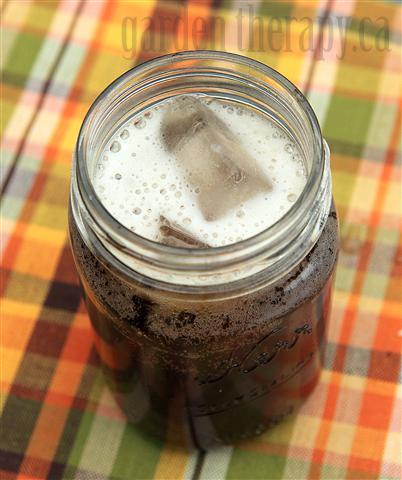
Homemade Root Beer Recipe [Read more...]

Share

Book Club: The Year-Round Vegetable Gardener

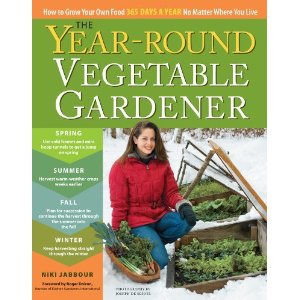
This month we take a look at a garden book from a few different perspectives.  Three of our reviewers from Garden Therapy Book Club join us to share their thoughts on The Year-Round Vegetable Gardener: How to Grow Your Own Food 365 Days a Year, No Matter Where You Live.


[Read more...]

Share

Weekend Handmade: Trivets to Stepping Stones

We had a great start to Garden Therapy Book Club with lots of readers visiting and commenting on the recipes from A Green Guide to Natural Beauty + Mango Citrus Body Butter Recipe and Hemp & Honey Lip Balm.  The selection is a book that I’ve been very excited about reviewing: Weekend Handmade, by Kelly Wilkinson.

On the jacket, it describes Kelly Wilkinson as a “craft designer and journalist” with projects appearing in many stylish blogs like Apartment Therapy and Design*Sponge.  Since the title and cover reminded me of the Weekend Project that I post here each week, I was pretty jazzed to dig in.

[Read more...]

Share

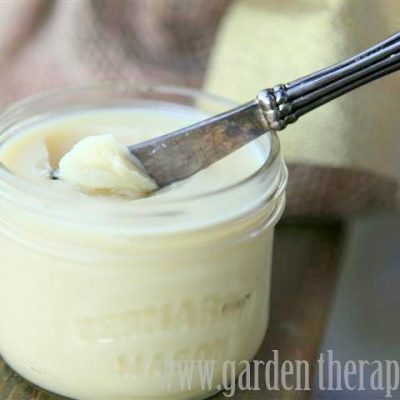
A Green Guide to Natural Beauty + Mango Citrus Body Butter Recipe

It’s time to review our very first Garden Therapy Book Club book,  A Green Guide to Natural Beauty: 35 step-by-step projects for homemade beauty by Karen Gilbert.

There are many different types of books we will be looking at in Book Club, but when the book is DIY or project-based, then the best way to test it out is to give the projects a try.  As the title suggests, A Green Guide to Natural Beauty boasts 35 different natural beauty projects, which made it very appealing given that I’ve been aiming to make as many of my bath and body products as I can.  As part of the Natural Skincare Series I’ve shared recipes and tutorials for soap, scrubs, and bath products all made with natural ingredients, and where possible ingredients from my garden.

First and foremost this book is beautiful.  The photography is stunning and while those who love lots of bright colour may find the pages a tad on the beige side.  There is a reason for this, however, as the projects listed use natural ingredients (read: no crazy colorants or unnatural fragrances).  I’m happy to keep my colour in the garden and the purest products on my skin, so I really the look of natural-coloured skincare products.  The first chapter of this book discusses natural skincare in detail: equipment, ingredients, preservatives, and shelf life.  All in all this is a great summary and provides a great deal of background into the benefits (many) and drawbacks (mainly preservatives and shelf-life) of natural products.  This section is worth a good read.

The rest of the book covers recipes and detailed instructions with photos on Chapter 2: For the Face, Chapter 3: For the Body, and Chapter 4: Bath and Shower.

I picked two recipes to try: Apricot Face Scrub (Chapter 2) and Mango Lime Body Butter (Chapter 3).


Apricot Face Scrub Recipe p. 60

This fairly simple recipe only required a few minutes to make, as long as you have the ingredients.  The ingredients aren’t that common, but since I have a natural products guru who I buy from, I was able to secure everything quite painlessly.  The concept is to mix apricot kernel oil, caster oil, and manuka honey with kaolin (white clay) and ground rice to make a paste.  They drawback with this recipe is that it will only last a few days and must be stored in the fridge to preserve it, so Karen suggests making only a tiny quantity at a time.

Review 2/5

While the recipe is super easy to make, all-natural, and fairly inexpensive, I didn’t like the feel of the product.  The ground rice is a bit harsh on the skin (she suggests trying ground oatmeal for a gentler scrub), and the oil leaves my face feeling unpleasantly greasy.  I’ve used it every day for a week and must wash afterwards with my homemade soap.  My face feels pretty good after washing a second time and moisturizing but I am still on the lookout for a different cleanser/exfoliatant recipe that suits my needs more.


Mango Citrus Body Butter p. 78

This recipe is listed as mango and LIME body butter, but I added a citrus essential oil blend which had an even balance of lemon, lime, sweet orange, and tangerine.

Ingredients:

  • 10g beeswax or jojoba wax
  • 25g cocoa butter
  • 30g shea butter
  • 25 g mango butter
  • 1 tsp almond oil
  • 1 tsp vitamin E
  • 20 drops citrus essential oil (recipe suggested 10 lime, 5 sweet orange, 5 lemon)

Equipment

  • Double boiler
  • Metal spoon
  • Airtight 100ml jar
  • Digital kitchen scale (this wasn’t listed in the recipe but it is essential for weighing your ingredients)

Instructions:

1.  Melt the beeswax, cocoa butter & mango butter in the double boiler.  Leave mixture over a gentle heat for 20 minutes to prevent the butter from going grainy when it cools.

2. Add the almond oil and vitamin E and heat for a few more minutes until completely liquid.

3. Remove from heat and add essential oils, stirring thoroughly

4. Pour into jars and leave to set.

Review 5/5

Five stars!  This recipe is great.  It’s easy, smells delightful, and makes your skin feel amazing.  Some people may be adverse to the oilyness that takes a bit of good massaging to rub in, but I don’t mind in the least.  My skin feels delightfully soft if I apply right out of the shower and it is even healing my dry heels after a week of use when no other moisturizer has.

In summary, I liked this book a great deal and I may try a few more recipes.  I will post about them if I do.  In the meantime please share your experiences with the projects listed here or in A Green Guide to Natural Beauty, if you have a chance to try out the recipes, by leaving a comment on this post.

Update June 28, 2012: Check out this and some other great body butter recipes at Revitalise Your Health‘s article on the Top 3 Best DIY Body Butter Recipes.  I want to try the whipped coconut butter next!


Share

Get Ready for the Garden Therapy Book Club!

I learned to garden at the library.  Well at least that’s where the guidance came from: the books.  When I was forced to stop working due to illness, both budget and boredom had me leaving the library with an armload of books on some gardening-related topic to learn about.  Then through multiple trials and failures and successes, I started to get my feet (or should I say thumbs?)  Now, as I sit in my Master Gardener’s course I’m surprised and delighted at the knowledge that can be gained through self study and practice.

Even though my gardening knowledge has a great foundation and soon you will have to call me “Master” (which I swear is not the only reason I’m taking the course), the library trips haven’t stopped or even slowed down.  Just today I picked up a bunch of new books with sewing projects as I hone my skills at my machine.  Plus I have a great big pile of wonderful gardening and garden-related craft books that I’ve been sent to review.

This is the inspiration that brewed the new Garden Therapy Book Club that will be launching, heck, let’s launch right now!

I’m not totally sure what the book club will look like in a few months time, but for now I’ll start with this: I’ll select a book every week or so to feature and review.  I’ve spent a fair bit of time out there searching for great books and interesting projects so I have a large selection to get us started.  If the book has projects in it I’ll give one or two of them a try and post the results.  Then, you can get a feel for if the book would be a fun for you as well, and maybe inspire you to get out for a little garden therapy.  All the books I recommend will be on this Pinterest board so you can find them easily.

If you decide to get a book on the reading list, get in touch with your review, thoughts whatever.  You can leave a comment, send some photos, or send a link to a project you tried from the book and I’ll post them up here.

Here’s a Disclaimer:  I do fully support using the library or buying the book wherever you prefer.  That being said, I will add links to the books on Amazon and if you buy the book from there I will get a small commission.  No pressure.  Anything that I make will just to help pay for new books and materials for my projects, the tutorials on this site for which I provide for free.   Some of the books are sent to me for review as well, which will not affect my review of the book.  If I love the book or hate it, I’ll disclose either way.  Never fear, I’m not doing this to generate great gobs of income (ha!) and will not be “pushing” books.  The goal is to have fun and I hope you will join me.

Now, for our very first book club selection check out A Green Guide to Natural Beauty: 35 step-by-step projects for homemade beauty by Karen Gilbert.  Based on the popularity of the Natural Skincare Series of recipes that were posted before the holidays, I though this would be a great place to start.  Look for a review to come next week, with a project tutorial from the book.

 Please chime in if you plan to grab a copy and want to share your thoughts.

Share

Concrete Garden Planters & Stepping Stones

Not long ago I saw some very cool, modern concrete planters that I added to my DIY To Do List.  Not long afterwards the lovely folks over at Timber Press sent me a copy of Concrete Garden Projects: Easy & Inexpensive Containers, Furniture, Water Features & More to review so when I had a crafty friend stop by for a visit + a sunny afternoon, I needed no more hints to dig into some projects.

Modern Concrete Planters

The projects in the book are great starting points for concrete projects that will suit many different garden styles.  In addition to modern planters we made some leaf print stepping stones: some in moulds with pressed leaves and one where we used a giant hydrangea leaf as the mould. 

Leaf Imprint Concrete Stepping Stones

The authors, Malin Nilsson and Camilla Arvidsson, layed out each project in six simple steps which were easy to follow, especially easy given each step has a beautiful photograph.  The best part was the ease and speed at which you can create concrete projects; we had seven planters and seven stepping stones curing within an hour of arriving home with the materials.

modern concrete planters

For the planters, we used a variety of different sized plastic tubs that we collected.  I filled my three square tubs with concrete and used round tubs and cups for the holes. I then filled the some of the larger hole-spacers with concrete and a small cup so each would produce yet another planter.

 Modern Concrete Planters

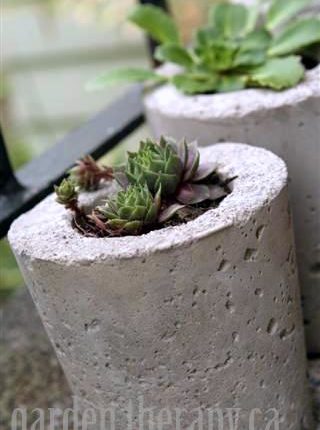
 I particularly loved how this one square planter turned out when planted with sedum.

 Concrete Garden Planter with Sedum

The stepping stones were also formed in plastic tubs, but larger, shallower ones.  We pressed interesting leaves found around the garden (lady’s mantle, Japanese maple, and hosta) and weighted them with small stones.  When un-moulded, they have depressions that will hopefully fill with little pools of water or perhaps moss.

 Hosta Imprint Concrete Stepping Stone

Near the end, we took the left over concrete and piled it in a mound on top of a giant hosta leaf.  When nestled into the shade garden it is right at home with the hosta who donated a leaf for the mould.

Concrete Stepping Stone Hosta Leaf

It was so surprisingly easy to make stepping stones that I’m happy to say that my days of hunting for rocks in rivers and back alleys might just be over (insert grinning husband here).   I would certainly recommend the book to anyone looking for a fun and creative way to spend a sunny afternoon in the garden.


Share

Grocery Gardening: Book Review

Since I have begun blogging about my gardens and food, I’ve met so many interesting people who I learn from daily.  I’ve had mystery plants identified for me, been given family recipes to try, been inspired by creative design ideas, and received so much wonderful feedback on this site.  It’s this aspect of connection and sharing that has brought so many gardeners online to social media and now a collaboration of some of these “Social Gardeners” have published a book food wisdom called Grocery Gardening: Planting, Preparing and Preserving Fresh Food.

First let me say how fascinated I was by the story of how this book was put together for publication.  The author, Jean Ann Van Krevelen, and the main contributors, Amanda Thomsen, Robin Ripley and Theresa O’Connor, have never met except online through Twitter.  Not only that, but the input for the book (i.e.: tips and recipes) were collected via social media and the whole thing was brought to print in 60 days.  Pretty cool, eh?

I found the format and content to certainly reflect the collaborative voices and many times it felt as if I was reading the transcripts of a meeting among friends sharing their advice on to starting an edible garden.  I too have never met any of the authors of contributors of this book, but I do feel like I know them though chats on various social media or by following their blogs.  This book certainly points out the interesting new dynamic to the gardening culture has been created through Twitter, Facebook and the blogosphere, allowing for sharing of time honored ideas and exposure to gardens and cooks from around the world.  I could go on and on, but it’s best now to get onto the review.

Grocery Gardening is laid out in 5 sections:

  1. Gardening 101: A valuable set of basics important for any first time vegetable gardener.
  2. Organic Disease and Pest Management: This section highlights the importance of using organic practices to ensure you are growing the healthiest possible food.
  3. Purchasing Quality Produce: Although it’s only a few pages long, this was certainly my very favourite part the book and essential reading for anyone who is interested in re-educating themselves on what food really should look and smell like.  I was happy to see the Dirty Dozen and Clean Fifteen (Regarding Fruit and Vegetables Most and Least Contaminated with Pesticides). Ever since I first saw these lists on http://www.davidsuzuki.org/, I have carried it around in my wallet.  While this list doesn’t help you make a decision based on the environmental impact of choosing organic or non-organic produce, it is such a handy way to limit the toxins I put in my grocery bag and helps me choose what I should grow organically myself.

    For a free iPhone app and the full list check out Environmental Working Group’s FoodNews by clicking on this image.

  4. Edibles: The main section of the book outlines the basics of growing, harvesting, and then preparing a selection of herbs, fruit, and vegetables.  The sidebar tips from the contributors were my favourite part of this section as I learned some handy new tricks—like that you can root store bought basil in a glass of water—plus the recipes were simple and in line with the real food ideas of the book.  The list of produce chosen is fairly short and therefore I found that some of my favourites were missing (radishes, beets, and potatoes I noticed specifically because I went looking for them) but certainly the basics are there for a novice gardener and the recipes look great. In fact there is one recipe that I’ve been thinking about since I read the book: Best Broccoli Quiche in the World by Shawna Coronado.  Really, who wouldn’t want to try it with that title? Mmmm.
  5. Preserving Your Harvest: While this feels like eons away right now, I remember how I scoured my bookshelves for this exact information last fall when I was knee deep in berries, apples, tomatoes and squash.  This section again, is basic information but a handy set of notes for the first-timer nonetheless.

I found the voice was refreshing in the book, and while the photos and layout are beautiful, the content to me feels more like a veggie gardening notebook that I would keep with me, to jot down notes I’ve learned from other savvy gardeners.  I believe that this collection of ideas would be a great book for anyone who wants to start a vegetable garden, who wants to know how things are grown, and then have an arsenal of basic recipes to get started with.  I also think it will make a great gift for those who show a spark of interest in food gardening but don’t know where to start.  Now on to that Broccoli Quiche…


Share
2012 (c) Copyright Garden Therapy