Sunflower Micro Greens: A Time Lapse Photo Journal

Sunflower micro greens are deliciously nutty with the flavour of raw sunflower seeds but with the texture of spinach.  They are easy to grow in just about any container you can find around the house like clear plastic salad mix boxes.

Micro greens are different than sprouts because are grown in a soil or soil-like medium.  This is a time lapse photo journal of about 2 weeks growing time for my sunflower micro greens.

For more information on how to grow them check out this post on growing micro greens in a chicken dome.  For information on sprouting check out this post on sprouting mung beans and green peas in a mason jar or this post on my Fresh Life Automatic Sprouter.

Day 1

Day 5

Day 7

Day 15

Day 17

Share

Mason Jar Sprouts: Mung Beans and Green Peas

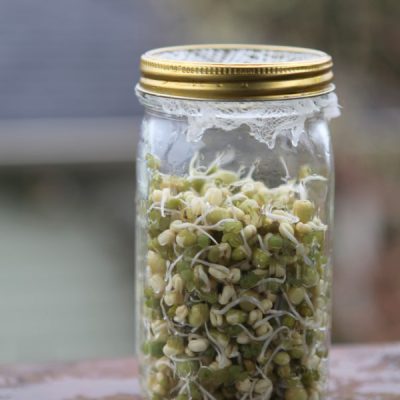
Sprouting is a quick and easy way to grow some nutritious, crunchy veg to add to your diet in the winter months.  I’ve previously shared how much I love using  my automatic sprouter but it’s just as easy with a mason jar and a windowsill.   While I like my automatic sprouter for masses of alfalfa, fenugreek, clover, radish, and broccoli sprouts that grow tall and last for weeks in the tray, mason jar sprouting is a good choice for crunchy beans and peas.  If you start today you will be adding them to the salad bowl or wok in about 4 days.

Many places sell a bean mix that contain a variety of different lentils, peas and beans.  I used mung beans (these are the beans that sprout the long white bean sprouts you typically find in Asian food) and green peas as I like the combination of starchy and sweet favour.  Plus they both sprout in 3-4 days so they are compatible for timing.

Fill a 1L mason jar 1/4 of the way with dried organic beans/peas.  Cover them with water and leave on your counter to soak overnight, 8-12 hours.  Cut a square of cheesecloth and secure it tightly with a canning jar ring.  Strain off water and set back down on your counter.  Rinse the jar contents now 4 x per day, straining off all the liquid.

After 4 days or so, the contents of the jar sprout and jar will start to fill up – it’s time to eat them!  Add raw to salads and sandwiches or toss into stir-fries and soups.  I have also heard of people adding them to smoothies although I’m not tripping over myself to try that one.  Any other ideas on how to use these sprouts in recipes?

See this post featured at At the Picket Fence’s Inspiration Friday and North Coast Gardening’s Miscellany Monday.

Update: I buy my seeds from West Coast Seeds but you can also find them online here.

Share

Gardening for Your Kitchen Table: Sprouts

I wasn’t into gardening in the 70’s (unless you count eating dirt while running around my yard in diapers) but those of my friends who were a bit older back then remember growing their own sprouts in a jar or a basket, forgetting about them on a windowsill and that memorable odour of neglected, fuzzy sprouts.

Well if that’s how you remember sprouting, then welcome to the new millennium.  For Christmas / Hanukkah a few years ago, I was the lucky recipient of a Fresh Life Automatic Sprouter and it’s been making regular appearances each winter as the garden is asleep.  This lovely contraption has a water basin below a tray for your seeds and sprinklers that automatically turns on and off at some random intervals that I have yet to figure out.  All you need to do is change the water in the basin daily, find a nice spot with some indirect light and in 4-6 days you’ll be eating crunchy fresh greens right from your tabletop.

Sprouts are nutritious little mini-plants full digestible energy, bioavailable vitamins, amino acids, minerals, enzymes, proteins and photochemicals.  All that good stuff is locked up within the seeds just waiting for you to give it the start needed to create a plant.  For more information on sprouting go here http://en.wikipedia.org/wiki/Sprouting.

Needless to say, many of us in cold climates are lacking nutrients in the winter.  Fresh vegetables aren’t growing in our gardens anymore, our pantry and freezers are emptying of the previous year’s harvest and we are resorting (ugh!) to buying our fresh produce shipped in from warmer climates.  That combined with the gardening itch that starts ramping up after Christmas for me, got me into sprouting.

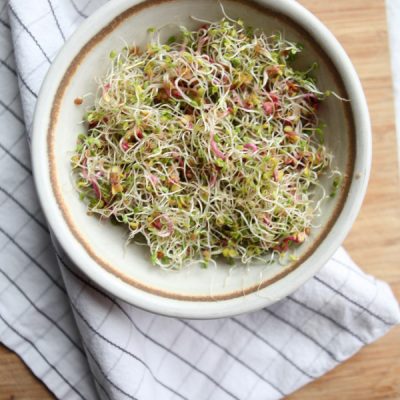
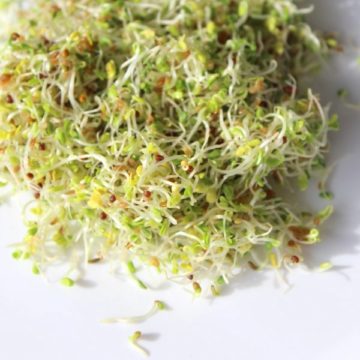
So far I have sprouted alfalfa, fenugreek, red clover, radish, broccoli, beets, spelt berries, mung beans, lentils, sunflower seeds, and I am currently working on a batch of green peas.  The results have been varied.  My favourite is the mix of alfalfa, fenugreek, red clover, radish that has the right mix of flavour and spice for salads and sandwiches.  The mung beans were hard to do and was an eye-opener for the unnatural conditions required to make those crunchy and sweet mung bean sprouts we get from China.  The lentils have a delicious nutty sweet flavour perfect for adding a crunch to soups, and the sunflower seeds are best grown as micro greens (seeds jam-packed in a soil-less mixture) rather than in the sprouter.

{From left: sprouting spelt berries, sunflower seeds, and alfalfa / radish / red clover mix; the Fresh Life Automatic Sprouter; the whirling sprinker is a hit with the under 4 crowd.}

As I was organizing all of my packets of seeds for the garden this coming season, I started feeling overwhelmed with the idea that I could very possibly be a garden hoarder.   I have a lot more seeds than I can possibly grow this year, or any year for that matter.  It seems reasonable then to sprout the suckers now and eat them before I have to call A&E and register for the show.

PS: I buy my seeds from West Coast Seeds but you can also find them online here.


Share

Sprout, Avocado and Cream Cheese Sandwich

This past week I have been pretty heavy into the holiday parties yet I still made time to harvest my sprouts and make myself a decidedly summery sandwich: avocado, cream cheese and a mixture of lentil, radish, broccoli, red clover, and alfalfa sprouts.  This powerhouse of nutrition was just the thing to keep me whooping it up holiday style, and it makes a much healthier hangover meal!

Share

Growing Sunflower Sprouts Indoors

Tis the season for micro greens and sprouts.   The weather outside is frightful freakin’ cold – the coldest on record in 25 years.  Too cold to sprout seeds outdoors, even under cover, so I’ve brought the operation indoors.

A few years ago I gleefully ripped open my festively-wrapped automatic sprouter and started the winter tradition of growing fresh greens on my kitchen table in the less pleasant months.   There are many seeds that benefit from spouting in this manner (hydroponically) like radish, alfalfa, lentil, clover, and many more.  Sunflowers however, do much better when grown as micro-greens: seeds that are sprouted in soil and harvested as seedlings.


Indoor Gardening Project: Sunflower Micro Greens

Equipment:

  • makeshift mini greenhouse
  • organic black oil sunflower seeds
  • clean potting soil

Directions:

No fancy equipment need for this high-brow salad trimming.  I used a biodegradable plastic dome (make sure it’s food safe) from a pre-cooked organic chicken: a prefect soil tray and greenhouse.  You could also use a milk jug cut in half, a cake tray, or whatever you can imagine that would create a mini greenhouse.


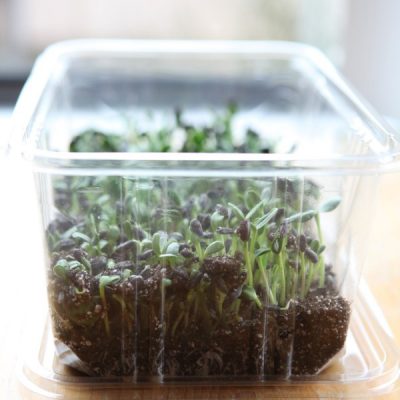
 Add about an inch of clean, rich soil to the bottom tray, and spread sunflower seeds over the top.  I generously cover the soil with seeds not letting any of them overlap.  Cover those seeds with just enough soil to hold moisture on them and put in a warm place out of direct sunlight.  The top of the fridge is a great place to sprout them.  In 1-4 days when the seeds have sprouted, remove the dome and get them to a bright windowsill.  Don’t bother using a grow light or worrying if the sun isn’t shining every day.  Who cares if they are leggy?!  You just get more yummy sprout to eat.


 The micro greens are ready to harvest when the mighty seedlings push up the soil (which helps to knock off the black husks) and grow two fat seed leaves.  Snip the seedlings at the base and wash in a salad spinner.  The nutty flavour is a fresh treat in the colder months and it only takes about 7 days from seed to table.


A great winter project for those days when you want to eat a salad and imagine yourself in Hawaii.

Share

Radishlings on Toast and Egg

My radishes are growing so well under the umbrella greenhouses that I started thinning them this morning.  Not one to throw away fresh greens, I topped my breakfast with the culled radishlings.  With all the pepper in me now, I think I’ll go do some gardening!

Share
2012 (c) Copyright Garden Therapy