

A bee bath is a simple bee water feeder that is easy to make and care for in your home garden, and it’s a nice touch to set out for your pollinating guests. After all, without those busy workers in the garden, you wouldn’t have as many beautiful blooms or fresh vegetables and fruit to harvest.
Attracting bees to the garden is an important way to keep your garden healthy and productive. You don’t need to have a mason bee house for native bees, or keep honeybees in boxes to invite these fuzzy, striped insects into your yard.
Planting bee-friendly plants and creating an attractive habitat for them should be enough to welcome them into your yard.
But creating a bee-friendly garden means more than just planting flowers! You certainly want to attract them with gorgeous blooms, but while they are in your garden, you will want to give them a place to collect water: a pond, fountain, or a bee bath.
Here’s how you can make your own bee bath to give the local bees a place to rest and drink.
- Why Do Bees Need Water?
- How to Make a Bee Bath
- Materials
- Make It!
- Keep It Clean
- Bee Bath FAQ
- More Ways to Help the Bees
Why Do Bees Need Water?
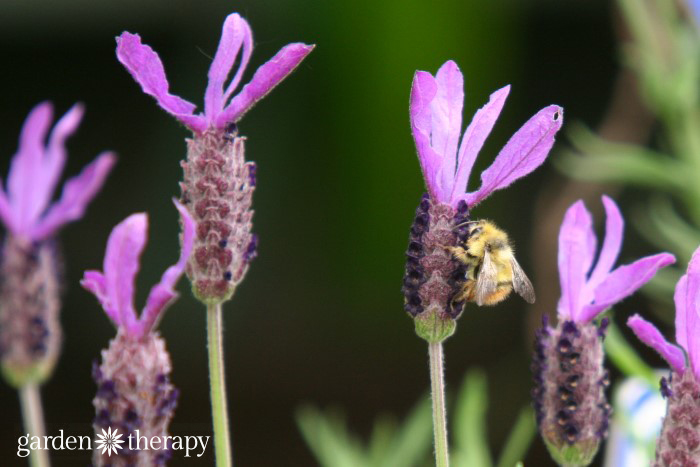
Beekeepers know the importance of having water available for bees. They collect water for a variety of reasons:
- Dilute honey: Bees use water to manage the consistency of honey and thin out honey that has crystallized.
- Help with digestion: Just like us, bees need water to aid digestion.
- Keep the hive cool: These smart little creatures will add water to the hive and fan it with their wings, air-conditioning the space by cooling it down.
- Feed the babies: The nurse bees that feed the larvae need plenty of water to create the right baby food (royal jelly).
How to Make a Bee Bath
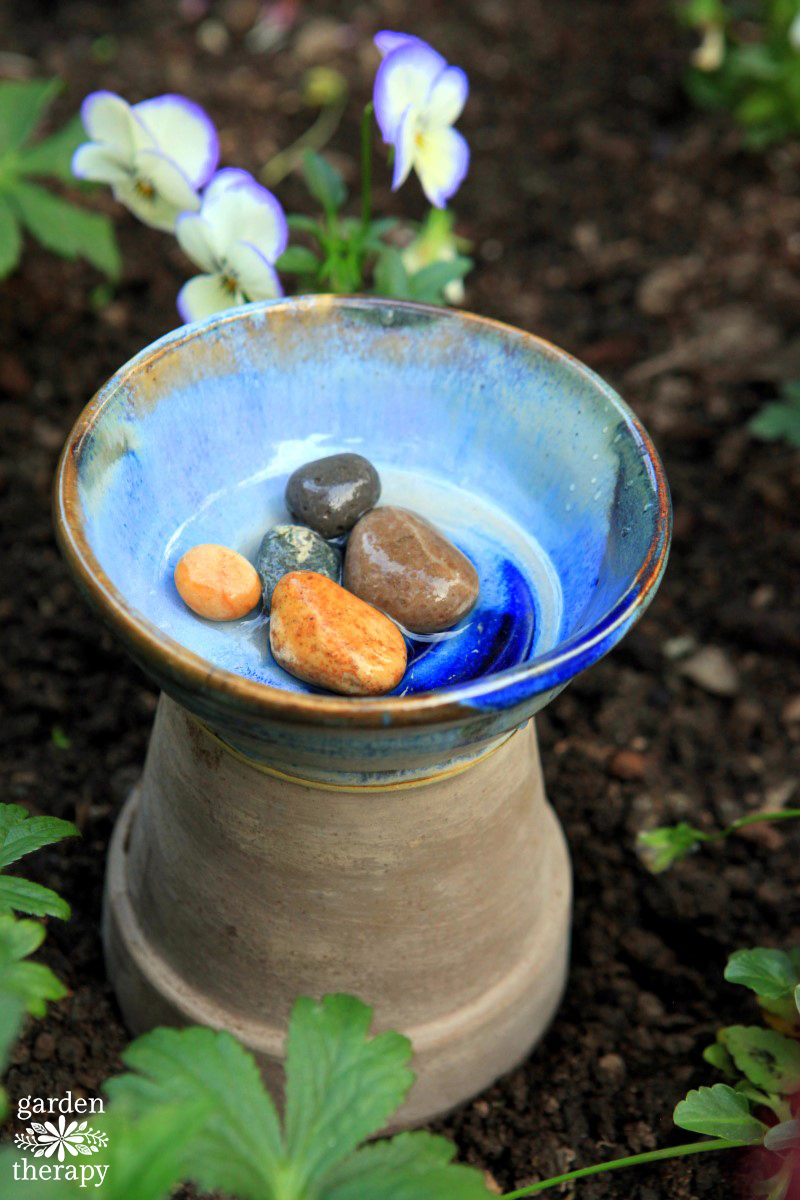
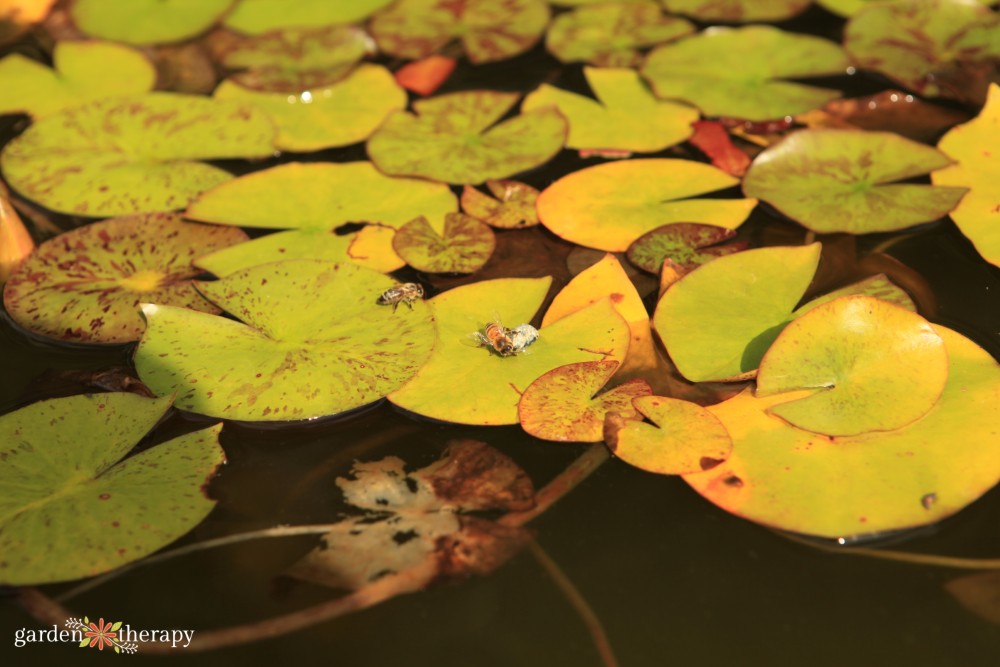
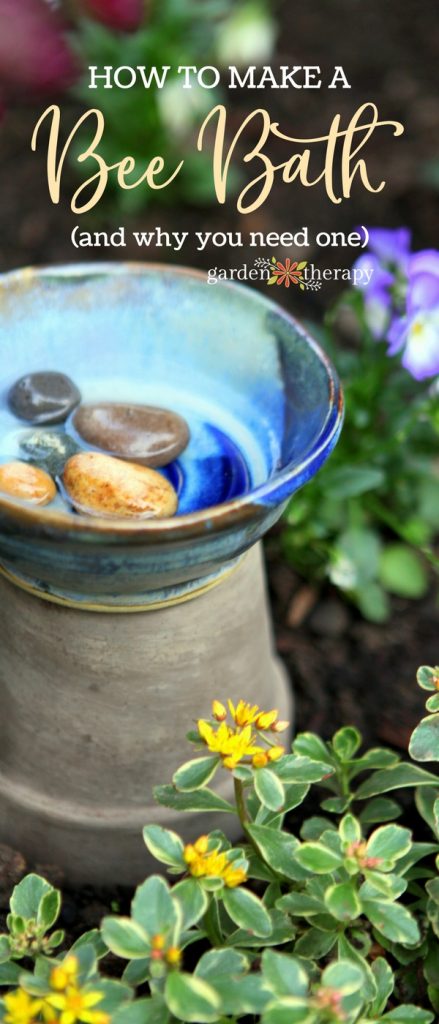
In the home garden, a shallow dish or bowl with some rocks in it that sits above clean water is just enough to give bees a drink. The idea is to create a source of fresh water that has places for the bees to perch as they drink and collect water.
Materials
- Shallow dish
- Plant pot
- River stones
- Fresh water
Make It!
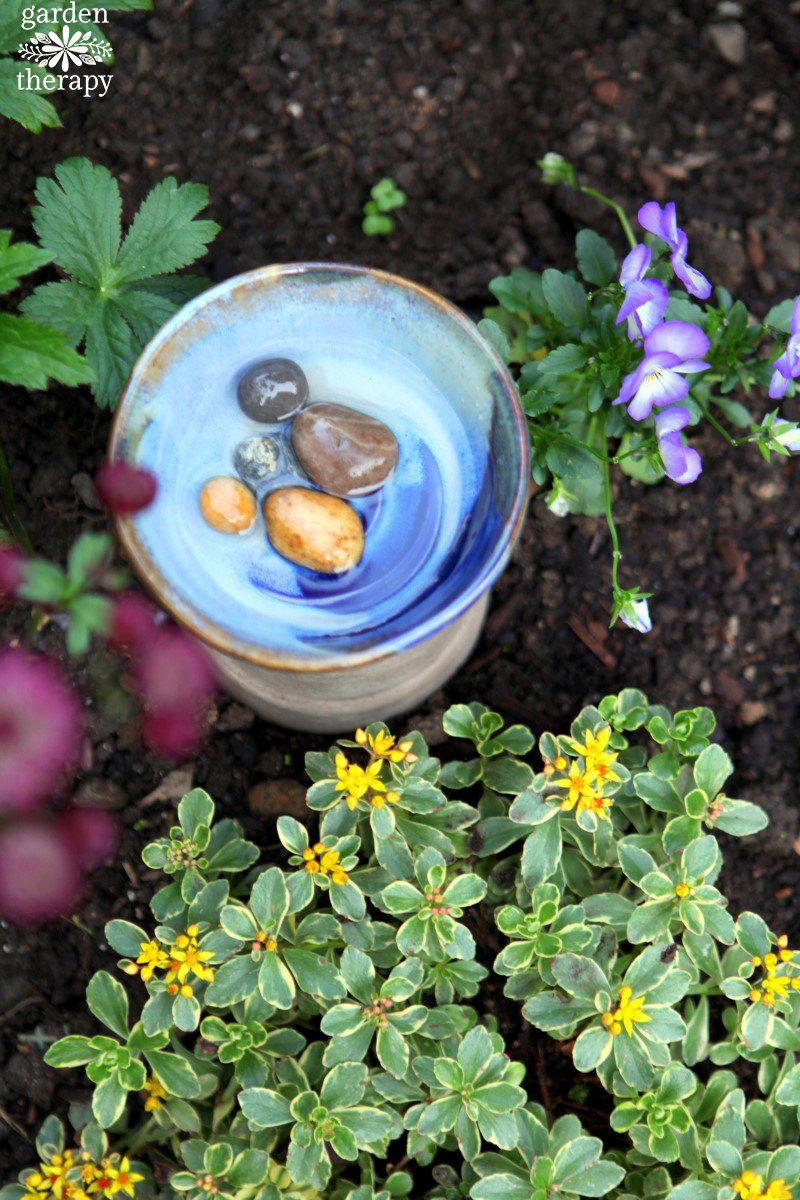
Choose a spot in the garden that is protected and shady. Turn a plant pot upside down to use as a base. Place a shallow dish on top of the pot. Choose a dish that is water-safe, like glass or ceramic, as plastics and metals may leach into the water.
Add a few river stones to the dish. Add just enough water so that the tops of the stones are not submerged.
Keep It Clean
While it’s a whole lot of fun to serve recipes of homemade foodies to backyard wildlife, it also comes with some responsibility. Feeders, bee, and bird baths need to be regularly maintained and cleaned to keep garden visitors safe.
Just because the recipes are served outdoors doesn’t mean you can just set them and forget them. Harmful microorganisms can grow and make wildlife sick.
Change the water daily and clean the bee bath weekly.
Bee Bath FAQ
Rainwater is best, but you can also filter tap water if it is not overly treated. I’m lucky to have very clean water in my city, so I use my tap water. The added chlorine will evaporate quickly in such a small amount with so much surface area.
Ideally, creating shade under a tree or tall plant is a good idea. However, a bee bath in the sun is better than no bee bath. The water might evaporate more quickly, so consider using larger stones to fill the water higher.
Water sources in the garden don’t discriminate, and all thirsty critters may stop by for a sip. That being said, it will not attract new wasps to your garden that weren’t already there. Even if it did, the wasps are very beneficial insects to have in the garden. While I know they can be a nuisance, having space to allow all the wild creatures to visit your garden will help keep the ecosystem in balance.
While mosquitoes love standing water to lay their eggs, you should change the water daily for the bees. This will keep the water free from hatching mosquitoes. I also wash my bee bath with castile soap weekly.
More Ways to Help the Bees
- Identify The Types of Bees Visiting Your Garden
- Plants and Tips to Create a Bee-Friendly Garden
- Build a Bee House for Solitary Bees
- Raking Leaves in Your Yard? Stop What You’re Doing!
- The Beneficial Insects You Want to Have in Your Garden

A city girl who learned to garden and it changed everything. Author, artist, Master Gardener. Better living through plants.

I have just purchased and put in ‘Seedles’ to encourage more bees into my gardens. Am excited to see what happens! I am going to put in the bee bath to help them prosper. Think I will also use more stones.
What a good idea! I hadn´t thought about putting water for bees, but it makes a lot of sense. I have water for birds!
I will create a bee bath.
Thank you for the idea.
Adelita
Hey! I just set up a bee bath for the bees in my lavender but found that within an hour there was a large number of black ants surrounding the bowl (though it looks like none have drowned yet). Is it okay to have these ants also fixated on the bath or should I put something down to make it more bee-only? Also slightly worried about getting an ant infestation in the lavender
Hi Lorna,
Ants get thirsty too! I don’t mind ants in the garden, they are hard workers and do a lot of cleaning up debris. They become a nuisance when they start to enter the house, or farm aphids on your plants. Ants like the honeydew that is produced by the aphids and so they will place them on plants and run the farm. Lavender is not typically susceptible to aphids so I don’t think you have anything to worry about. Enjoy your new garden friends!
Spread diatomaceous earth all around the base of bath.
Is there a recommended water to use such as spring water or distilled? I work at a greenhouse and lead workshops and one of my upcoming workshops is building a pollinator bath. I want to make sure using regular tap water that is ran through a water softener system is safe to use.
Rainwater is best, but you can also filter tap water if it is not overly treated. I’m lucky to have very clean water in my city. I don’t know about spring water or distilled water for bees. I just try to keep it as close to the natural water they would be drinking and provide that.
Please talk with a beekeeper! You will probably water a lot of things. As a female journeyman beekeeper, the bee bath seems to be more for decoration. Honey bees and most other bees do not like tap water, they seem to like pond water and puddles! Please call your local county extension office or your state dept of agriculture and get the facts on how to water bees for your area. How about becoming a beekeeper, you will be amazed!!!