My first home was a blue bungalow in an emerging neighbourhood that nobody wanted. It was at the top of my budget, so I made plans to fix it up using found materials, elbow grease, and a healthy dose of creativity. Many years were spent searching classified ads, thrift shops, and salvage yards for second-hand materials that would bring a new life to the inside of the house.
Over those transformative years, I redesigned the gardens as well. It was perfect: a unique, one-of-a-kind, bespoke outdoor living space that took five years and hundreds of memories to build.
My time in the blue bungalow was more than twenty years and two houses ago. It seems like a lifetime has passed, given how much things have changed. Back then, it would have been much easier to purchase new materials from a big-box store than to hunt for reclaimed treasures, but I had more gumption than money.
With a nonexistent budget, my biggest challenge was that I didn’t want my home and garden to look “junky.” My aesthetic is natural and artistic, not flea market finds. I sought high-quality materials that had endured well through their first use, proving they would perform far better than new, cheaply manufactured materials designed for obsolescence.
In our current culture of overconsumption, we gravitate toward the conveniences of availability, low prices, and instant home delivery rather than the hunt-and- gather approach to collecting goods. Quality matters less than ever. Replacements are readily available, and we rarely invest in heirlooms.
It’s increasingly disheartening to witness our older generations unable to rehome their gold-rimmed wedding dishware or perfectly preserved birdseye maple headboards. Instead, people buy a $19.99 Costco dish set or a $199 upholstered headboard, all of which will be broken and destined for the landfill in five years.
This mindset is also happening in our gardens. Mass-produced plastic planters have replaced stone urns or handcrafted ironwork that withstand decades of weather. Garden tools have become disposable, with flimsy handles and blades that bend after a season’s use. The plants we choose are an expensive means of decorating a garden, rather than the treasured divisions from family and neighbours or prized heirlooms adopted at a botanical garden’s gift shop.
I remain hopeful that this trend for cheap and cheerful is fading as quickly as the products get tossed in a dumpster. There is evidence that this is the case. I see a renewed interest in heirlooms in our homes and gardens because the younger generations are turning to beauty, quality, and outstanding value.
The choice to buy something that is better quality and more beautiful for the same price as a cheaply made new product is a logical decision, of course. The question remains, is it worth the time and effort?
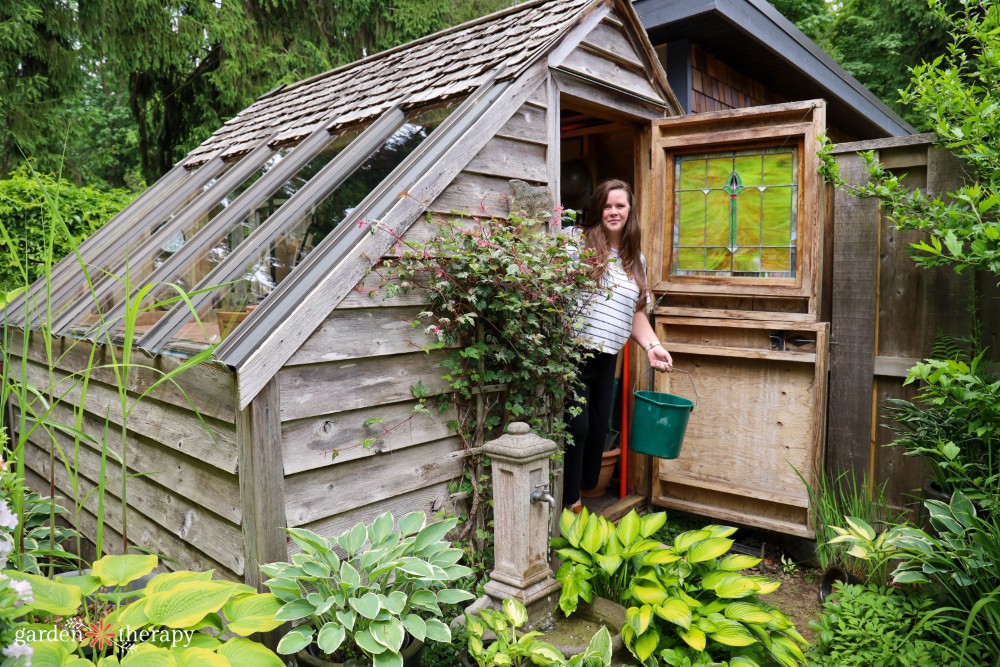
Making The Wild & Free Garden
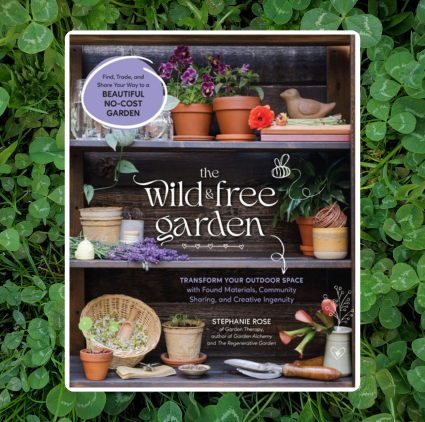
What you just read was an excerpt from the beginning of my latest book, The Wild & Free Garden.
Before I had started writing the book, I set out to do a no-buy low-buy year. I was fairly settled into my “new” house, but the garden still needed a lot of love to get to where I wanted it to be.
In my low-buy year, I avoided any kind of big box and commercial stores, opting to find things secondhand and only buy new from small, local, or individually owned businesses whenever possible. I stopped ordering anything online and would have to hunt for the items I needed on the secondhand market or consider purchases for days.
My goal was to try to keep materials out of the landfill while also finding unique and high-quality items. I could find everything I needed locally, and I found myself getting back to my resourceful roots as I started working on my garden. By now, I knew I wanted to write about the process and took pictures as I went along.
I wasn’t worried about things looking perfect immediately. Anything good takes time and special curation. In fact, I vote we get rid of the idea of perfectionism completely.
I’ve always defined my gardening style as following the path of nature. But this doesn’t mean my garden is unkempt and messy. Would you call a forest or a meadow messy? No, it’s a complete ecosystem that looks beautiful and glorious without the touch of a human.
Aesthetics is important to me as an urban gardener with a small space. I care that my garden looks beautiful for visitors or those walking by, but at the same time, it doesn’t have to fit in with current trends and gardening standards. We can use these wild concepts without things looking “messy.”
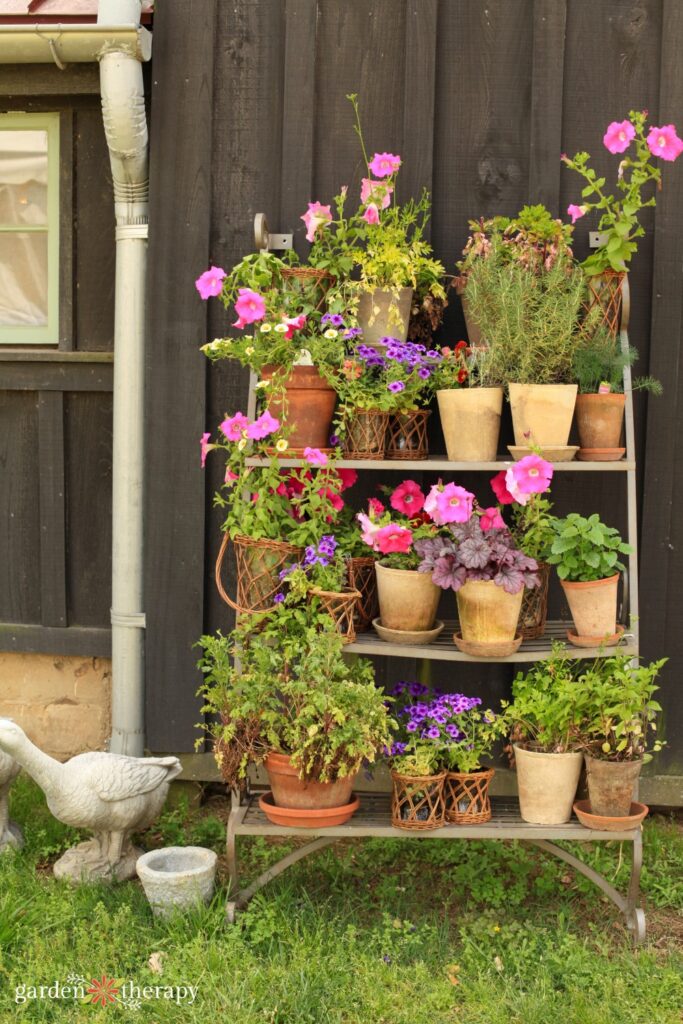
And as I created my new garden space using found and salvaged materials, and by connecting with the community, it’s clear that you don’t need to spend money to make a space beautiful, either. It just takes some resourcefulness, patience, and a change of mindset.
As I’m writing this, you can snag The Wild & Free Garden for just 3.99 on Kindle!
Why This Book Feels So Special
When I was writing The Wild & Free Garden, I could already tell how special it was. It felt different than any of my other books, and I could tell that people felt the same.
A lot of people who buy the book are interested in the title, looking for ways to get scrappier in the garden. But they find such a larger impact inside.
“Out of all the gardening books I have reviewed, The Wild & Free Garden has a uniqueness that really speaks to an eco-friendly girl like me. The main focus isn’t just saving money through gardening, but learning to reuse items you already have in your household and community. Not only is it reusing physical objects and sharing tools, but has a community focus on everything working together.” – Susan B. (Goodreads)
Having reviews like this is a dream for an author. I’ve written many books before, but having the opportunity to really affect people is an entirely something else.
“A genuinely inspiring read for gardeners who want more creativity and less consumerism in their outdoor practice. The Wild & Free philosophy is infectious — within a chapter or two, you’ll be looking at pallets, salvage yards, and your neighbors’ discarded pots with entirely new eyes. A book that changes how you think, not just what you plant.” – Elizabeth V. (Amazon)
As part of the press cycle, I’ve been going on podcasts to chat about some of the gardening and lifestyle principles in the books. During the podcast, I notice that the host will stop and pause mid-way through, looking up to the sky.
It’s an immediate cue that they’ve gone into their heads and started to think about the concepts we were talking about. Suddenly, they’re looking around them to see what they might be able to reuse or repurpose in the garden. They’ve stopped being an interviewer and have become someone who wants to participate.
“It has already been far more impactful than I expected. I initially thought I would flip through the pictures, read a few sections, and pick up a couple of ideas. While the book is a nice size and the photography is absolutely beautiful—and very inspiring on its own—it’s really the writing that makes this stand out. The author’s story, perspective, and the way she shares her experiences are genuinely engaging and motivating. This is not a book I’m just skimming; I actually want to read every page.” – Lilac (Amazon)
Sharing the Lessons From The Wild & Free Garden
The Wild & Free Garden doesn’t have a big press tour, and it’s not necessarily the type of book that people seek out, so I need your help getting it out there.
I truly believe that this is the book we all need right now. So much of what has happened in the past six years has been shaped by isolation, disconnection, and rising costs. Everyone is feeling the weight of it.
This project began as a way to explore how we can save money and reduce waste by using the sharing economy. With a little bit of ingenuity, we can hunt and gather to create a space that feels authentic while maintaining exceptional quality and style.
Then it blossomed into so much more. Exploring not just gardens, but our connection to the world around us.
It’s clear that the thing we are missing the most is connection. Less stuff, more space for our authentic selves, and more time spent on connecting with our community and nature. It’s a prescription for moving forward with intention and joy.
“We are in the process of transforming a section of our yard into a “secret garden,” but I have experienced some sticker shock with respect to the costs involved. The Wild & Free Garden book arrived just in time to provide an abundance of ideas and inspiration for us to create our space with free or low-cost materials–and to encourage us to slow down and enjoy the process as much as the final product.” – SunnySkies (Amazon)
So, if you are looking for ways to transform your garden, spend less money, create less waste, and revel in the abundance all around us, this book is for you. Get it from your local bookstore, online, or request it from the library. I promise you will gain so much more than just a beautiful garden.
You can snag the Kindle version for just $3.99 right now, which is just about as low as you can possibly get the book.
And if you like it, pass the book along to somebody else. This is how we make meaningful change.
Explore More From The Wild & Free Garden
- The Sharing Economy: A Simple Way to Cut Waste and Build Community
- Sourcing and Propagating Native Plants: Your Ethical Guide
- Inside a Whimsical Garden Filled with 80 Chandeliers, a Bathtub, and a Mossy Armchair
- The Complete List of Gardening Grants, Programs, and Resources for Home Gardeners

A city girl who learned to garden and it changed everything. Author, artist, Master Gardener. Better living through plants.