

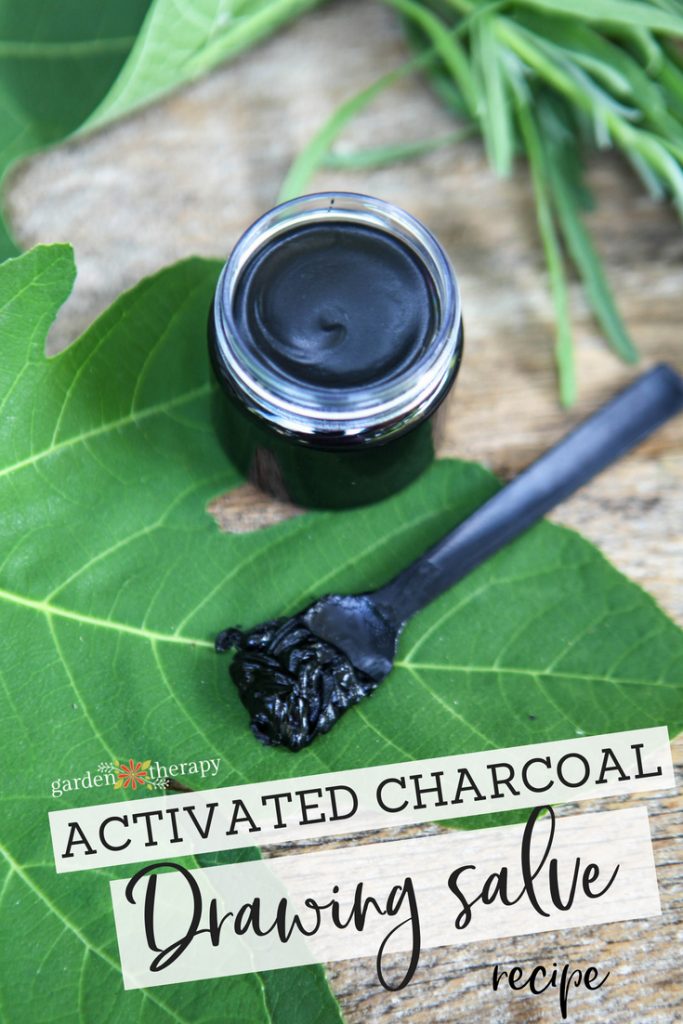
Drawing salve is useful for easing the pain of insect bites and stings, blisters, splinters, and more! This DIY drawing salve is made with charcoal, along with a mixture of herbal ingredients to help draw toxins away from your skin.
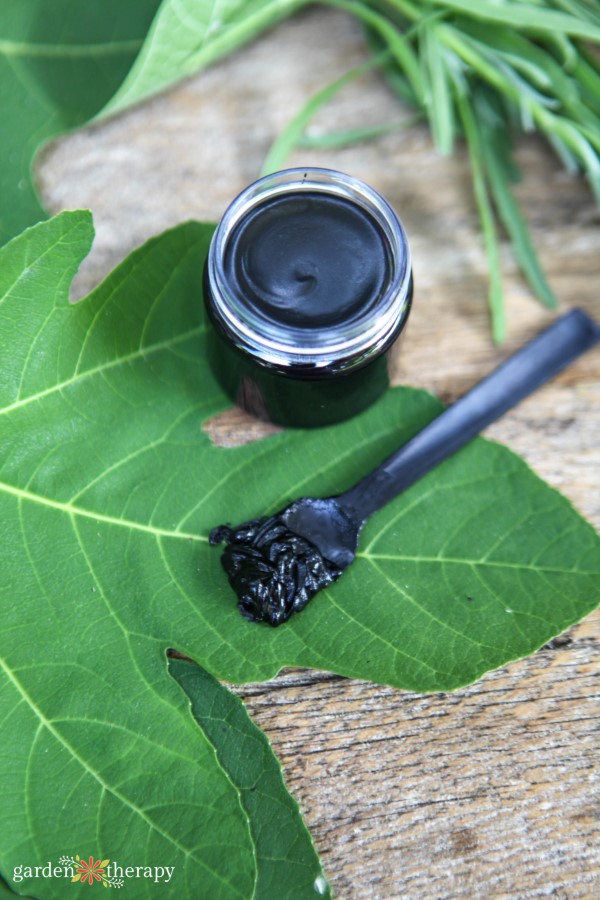
What the heck is activated charcoal, and why would you purposely make a black drawing out salve to rub on your skin? Before I answer that, I’ll share an even crazier story with you.
If you’ve been following along on Garden Therapy, you’ll see that I have a number of different recipes and garden ideas to keep away mosquitoes. I really hate mosquitoes. I’m one of those sensitive people who have a strong histamine reaction to the bites. I don’t just get an itchy little raised bump. I get a big, red, swollen blotch that takes every ounce of my willpower not to scratch like I’m going bananas.
So here’s the crazy part.
To test out this recipe for activated charcoal drawing salve, I actually invited mosquitoes into my house and allowed them to bite me! Even crazier? I am glad that I did!
Let me show you how you can make your own, and exactly how to use it.
- What is Drawing Salve?
- Ingredients for the Charcoal Drawing Salve
- Skin-Healing Salve Ingredients
- Does the Draw Out Salve Work for Bug Bites?
- How to Make the Charcoal Drawing Salve Recipe
- Ingredients
- Make It!
- How to Use Drawing Salve
- Charcoal Drawing Salve FAQ
- More Natural Remedies to Try
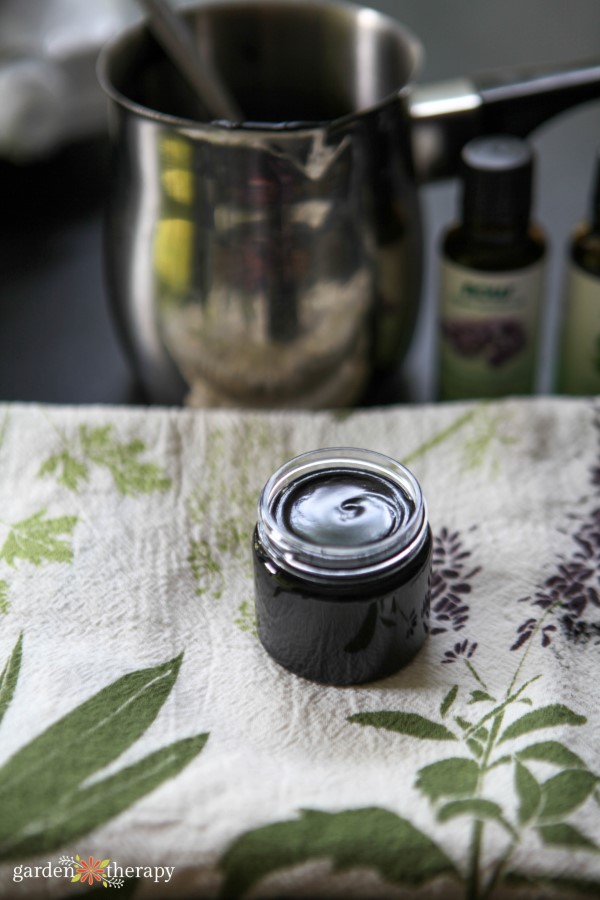
What is Drawing Salve?
A drawing salve is a mixture of oils and herbal ingredients that work to draw toxins from your skin and can be used on mosquito bites, wasp or bee stings, blisters, boils, slivers, and minor infections.
Activated charcoal and bentonite clay are very effective at sucking up toxins but, not surprisingly, they will leave your skin dried out after use.
Ingredients for the Charcoal Drawing Salve
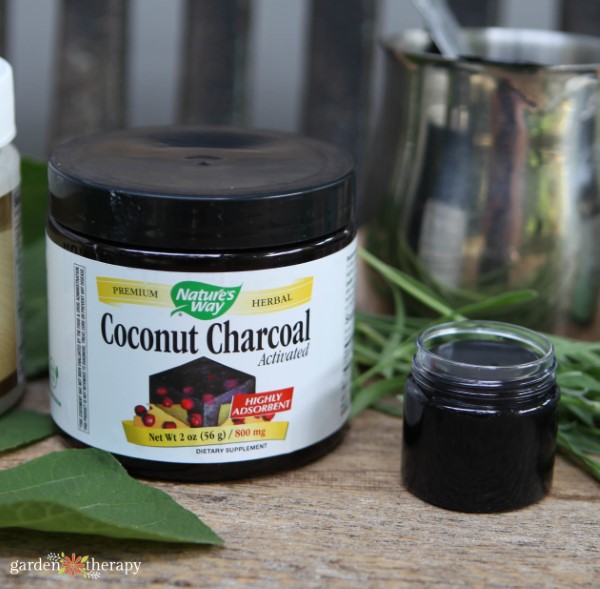
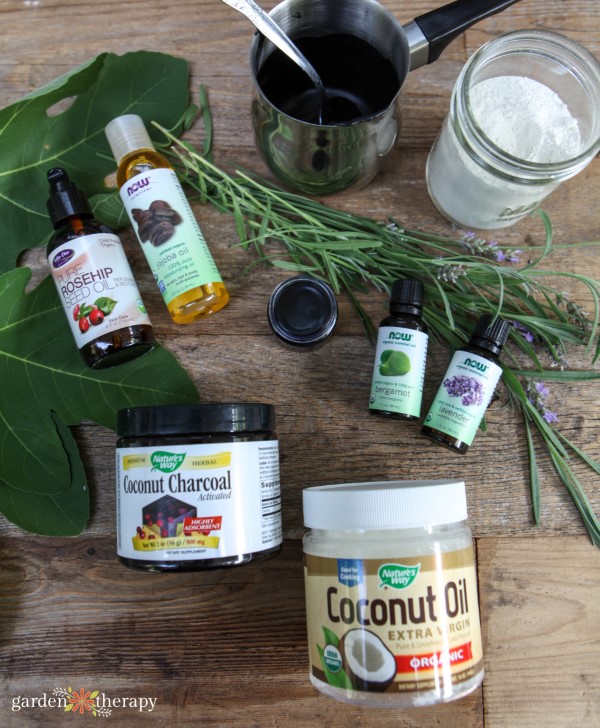
As activated charcoal is a big part of this drawing salve, I wanted to make sure to use the highest quality one I could find. I opted to go with Nature’s Way Coconut Charcoal.
Beyond the charcoal, I also wanted to add some skin-healing ingredients to test in my drawing salve. The key was not to choose ingredients that would absorb deeply into the skin, but instead those that help to repair the surface of the skin.
Skin-Healing Salve Ingredients
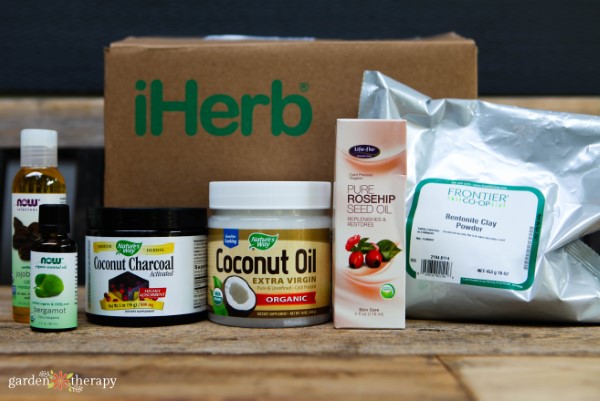
Here are the ingredients that I picked for the healing salve and the reasons why I chose each one of them.
- Bentonite Clay Powder – draws out toxins from skin
- Activated Coconut Charcoal – detoxifying and skin balancing
- Certified Organic Jojoba Oil – actually a wax (not an oil); the closest to our own skin’s sebum, so it is gentle and won’t clog pores.
- Organic Cold Pressed Rosehip Seed Oil – full of vitamins, antioxidants, and essential fatty acids that help repair skin
- Extra Virgin Coconut Oil (Organic) – carrier oil, has antimicrobial properties
- Bergamot Essential Oils – relieves stress on the skin
- Lavender Essential Oil –soothing on nerves and skin
Does the Draw Out Salve Work for Bug Bites?
After I got my materials, I invited the mosquito to the party.
I got a nice big bite on my arm and watched it swell up. I scratched it a few times (which is totally against my number one rule for keeping mosquito bites under control: do. not. scratch.)
As you can imagine, it was quite swollen and itchy. I applied my new and improved activated charcoal salve and covered it with a bandage. It was moderately itchy for the next 30 minutes while I went to sleep, but it didn’t keep me awake.
When I woke up the next morning, I took off the bandage and washed off the drawing salve. The bite was completely gone. Not even a tiny bump was left.
I’ve made a few other variations of drawing salve using activated coconut charcoal and bentonite clay, and I found that they definitely take away bites and infection, but they leave a little bump behind for a few days. And while the bite is no longer itchy, my skin feels dry. But my new recipe took the bite inflammation away completely and made my skin feel fantastic.
How to Make the Charcoal Drawing Salve Recipe
Besides mosquito bites, I’ve also been using this drawing salve on minor scrapes and cuts that have become inflamed to reduce infection. (Un) fortunately, I haven’t gotten a bee or wasp sting, so I haven’t been able to test the effectiveness of that. However, I’m sure I will eventually, and I’ll let you know if it works.
Now that you know why you need this salve in your herb cabinet, let’s chat about how to make it.
Ingredients
- 50 g Coconut Oil, Extra Virgin
- 10 g Jojoba Oil
- 12 g Beeswax
- 5 g Coconut Charcoal, Activated
- 3 g Bentonite Clay Powder
- 20 drops Rosehip Seed Oil
- 8 drops Bergamot Essential Oil
- 8 drops Lavender Essential Oil
Make It!
Weigh the ingredients on a small kitchen scale. In a double boiler, slowly heat up the coconut oil, jojoba oil, and beeswax until just melted.
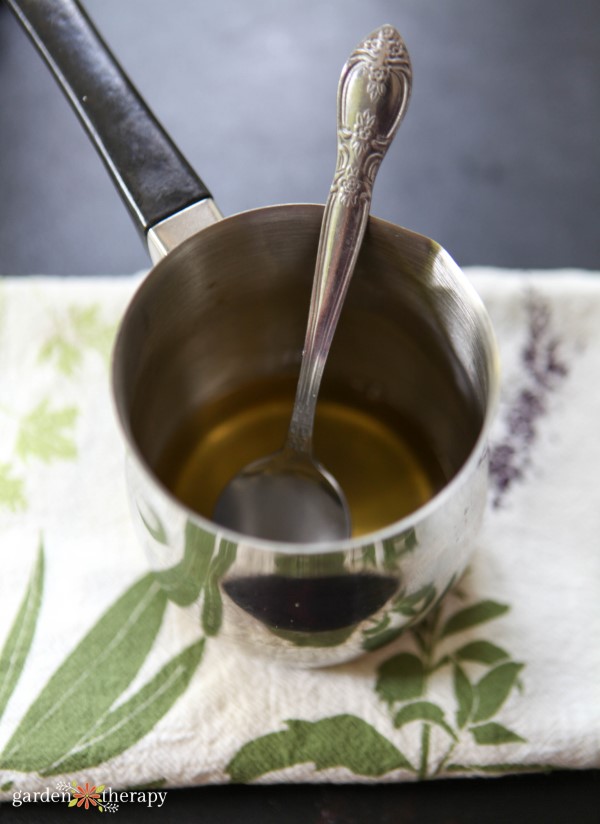
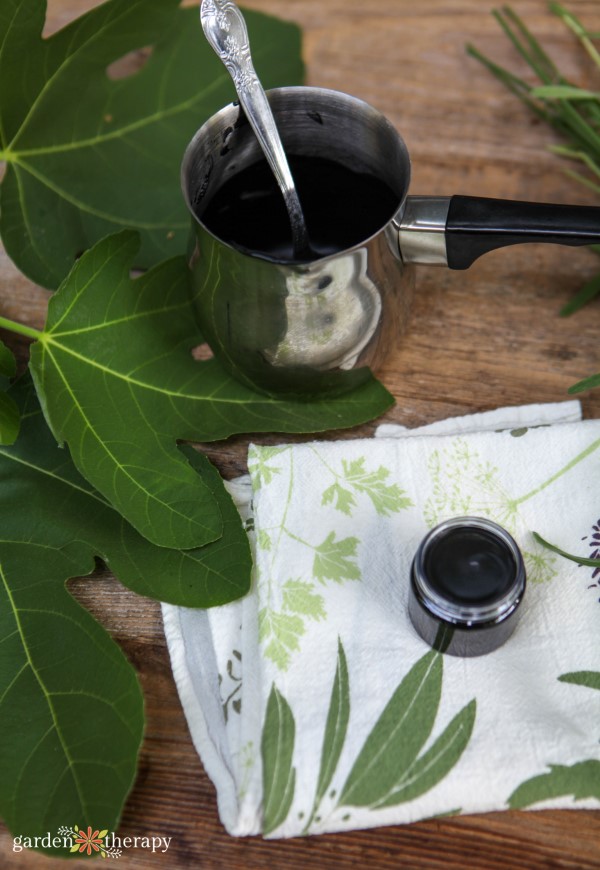
Remove from the stove and add the bentonite clay, coconut charcoal, and essential oils.
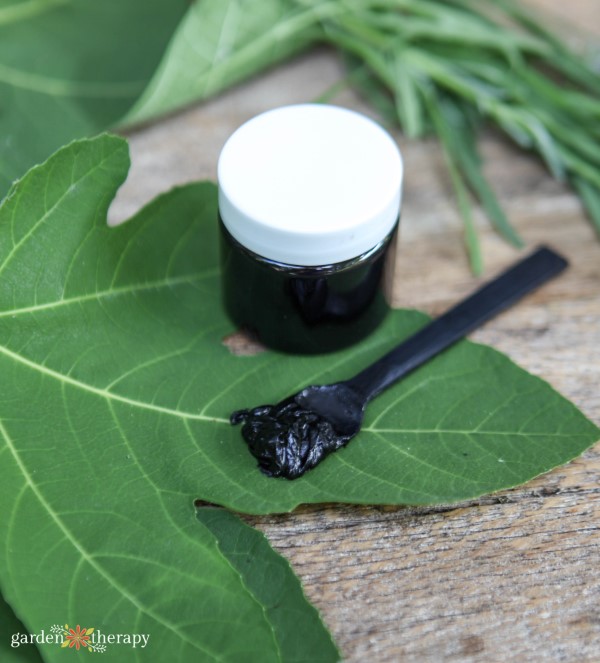
Pour the activated charcoal drawing salve into a glass jar or tin and let cool before using.
How to Use Drawing Salve
Use a small spatula or spoon to remove the salve from the jar to avoid adding contaminants from your fingers. The tiny spoons you get from tasting gelato work perfectly!
Apply a small amount to the skin and cover with a bandage. Leave on for up to 12 hours. I also use this recipe as a face mask, and it makes my skin feel lovely afterward!
Charcoal Drawing Salve FAQ
The salve will last as long as the oil expiry dates that you use. This is a general rule of thumb for all homemade products.
I used activated coconut charcoal, but any activated charcoal will work for this recipe.
Charcoal is known for drawing out toxins from the skin. It can help prevent infection when applied to a wound by absorbing bacteria, as well as reducing the odour that can come from the bacteria.
More Natural Remedies to Try
This charcoal salve is one of my favourite natural remedies to keep stocked in my herbal first aid kit. Here are some other favourites:
- All-Natural Bug Spray Recipe
- Homemade After-Sun Salve
- Herbal Roll-On Remedies for Headache, Sleep, and Cold & Flu
- Bug Off, Naturally: Terracotta Pot Citronella Candles
- All-Purpose Herbal Healing Salve
DIY Drawing Salve with Activated Charcoal
Equipment
Supplies
- 50 grams coconut oil
- 10 grams jojoba oil
- 12 grams beeswax
- 5 grams activated charcoal powder
- 3 grams bentonite clay
- 20 drops rosehip seed oil
- 8 drops bergamot essential oil
- 8 drops lavender essential oil
Instructions
- Use your kitchen scale to weigh all ingredients.
- Slowly melt the coconut oil, jojoba oil, and beeswax in the double boiler.
- Take the boiler off the stove, then add in coconut charcoal, bentonite clay, and the essential oils.
- Pour the mixture into a glass jar or tin, then allow to cool fully before using.
Notes

A city girl who learned to garden and it changed everything. Author, artist, Master Gardener. Better living through plants.

I made this and am very happy with the results … and I wanted to share that I liked the texture so much I made another batch, eliminating the charcoal, and it makes a fantastic shaving cream … I’ve tried other home shaving cream recipes but the addition of the beeswax and clay keeps the texture solid and manageable even in hot weather.
Hi Christina, What a great modification. I will be trying that out for myself. Thank you!
Thank you very much for the recipe.. I am excited to try it..
FYI I sell purified bees wax.. I get it from a local bee keeper & purify it myself…
I came here looking for recipes to use it in …
Hey there, In your list of ingredients, there is no mention of beeswax but in your directions of preparing it, there is….
Hi there I would love to make this but don’t know where to get the charcoal or the bentonite clay powder. Do you only get these online? I am in Victoria.
Thanks
Jane
try whole foods or choices :)
If you click on the ingredients that are in red it will take you to the website to purchase them..
So my daughter in law just found the coconut charcoal at Thrifty Foods. I guess I will just have to look for the clay as I will certainly find it too. Thanks!
I NEED to make this!
Jane
We have been using a variation of this since my son was a toddler and got a splinter. Here in Lancaster Co. Pennsylvania it’s known as Amish Drawing Salve. We use it on everything you mentioned, but if you have kiddos it’s essential for splinters – wresting a little one to remove a splinter is a harrowing task! It will draw the object out usually within an hour, but definitively over night! I’m excited to try your version because of the moisturizing elements. I do add a few drops of colloidal silver to my recipe to aid in healing and prevent any infection. Thank you for sharing!