Crocus flowers are one of my favourites simply because they’re first. As one of the earliest blooming flowers, they are a great source of food and energy for hungry spring bees. These bee breakfast pots are a fun project to create in the fall for a helpful burst of crocus flowers next spring.
Last spring, I had the pleasure of making summer-flowering bulb planters with a local Girl Guide group. We made the planters for Mother’s Day, and it was such a blast that I knew I wanted to make another batch this fall, instead with spring-flowering bulbs.
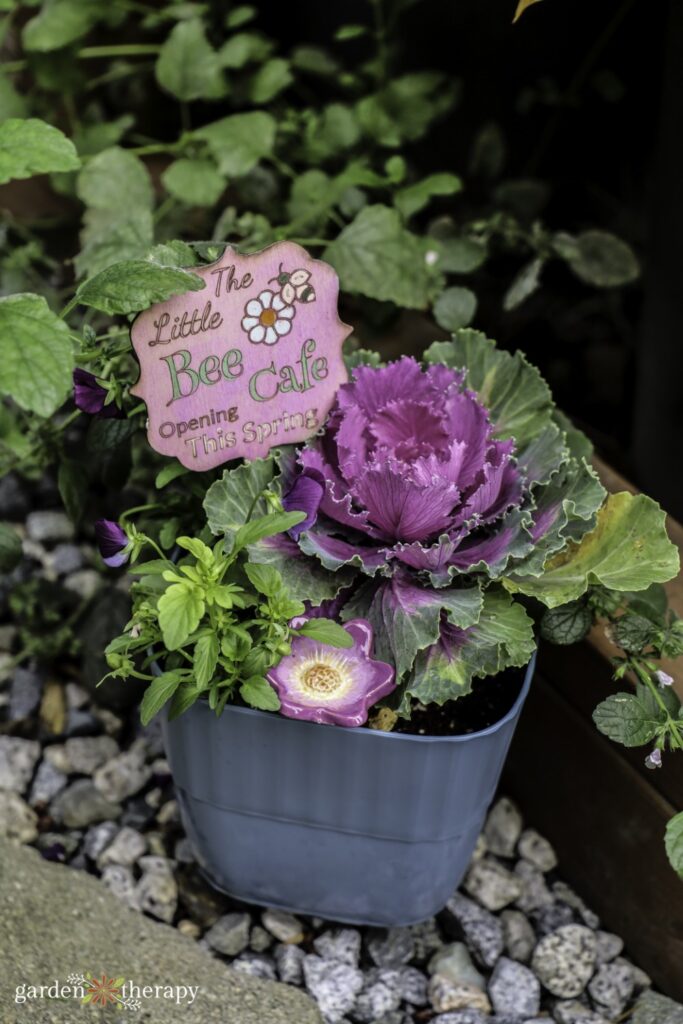
I approached an after-school art program and pitched the idea of making mini Bee Cafes that would serve up a bee breakfast. Filled with crocus bulbs, these little planters will become an early source of pollen for the first bees next spring. We added some cute signs, planted fall annuals on top, and even made pottery bee cups to give bees a place for water.
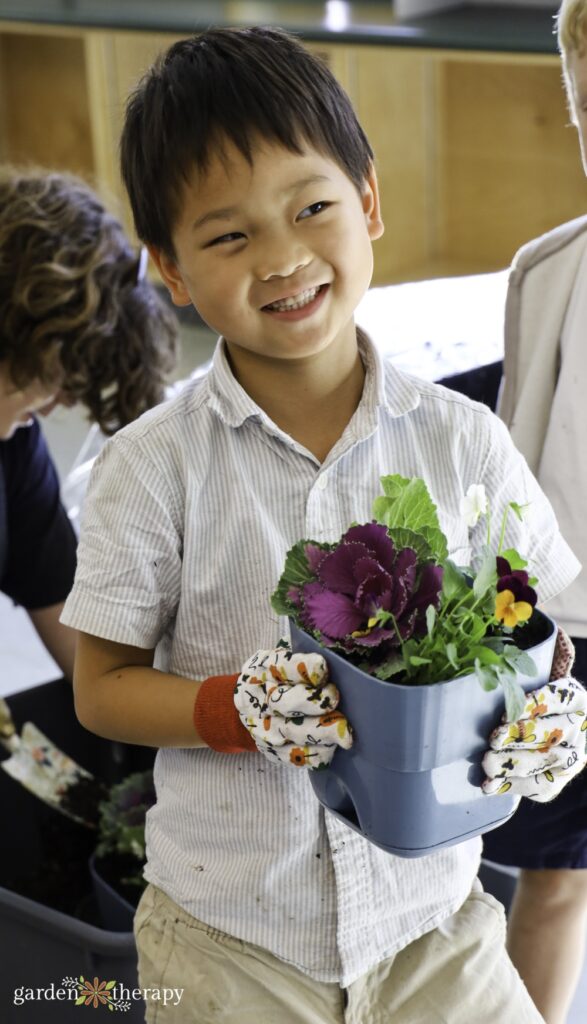
The best part of doing a project like this with children is seeing their excitement for gardening and nature begin to bubble. Not only do I want to introduce gardening, but also the importance of looking after our pollinators to the next generation.
The more we teach children about nature, the more they fall in love with it. And that grows a generation who will protect it. This kind of work is very dear to my heart, and I’m grateful to be working with Flowerbulb.eu on this project. Over the years, we have done many heart-centered projects to share education and excitement for planting flower bulbs, like my Friendsgiving last year, Spring Planting Party, Girl Guides Project, and Random Gifts of Flowers.
Doing a fun art project like this is a really great way to teach kids about bulbs that overwinter, gardening, and seasonality. Let me show you how you can make them for yourself or alongside the little ones in your life.
Sponsored Content: Thank you to Flowerbulb.eu for sponsoring this project and providing us with the crocus bulbs for the Bee Cafes. Flowerbulb.eu doesn’t sell bulbs, but they are the best resource to learn about the many different kinds of bulbs and how to plant and care for them. Make sure to go to Flowerbulb.eu for inspiration and education!
- Crocuses As Food for Early Pollinators
- Inspiring the Next Generation
- Inspiring the Next Generation
- How to Make Bee Breakfast Planter Pots
- Materials
- Make It!
- Decorating Your Planters
- Caring for Your Bee Breakfast Planters
- More Fall Bulb Inspiration
Crocuses As Food for Early Pollinators
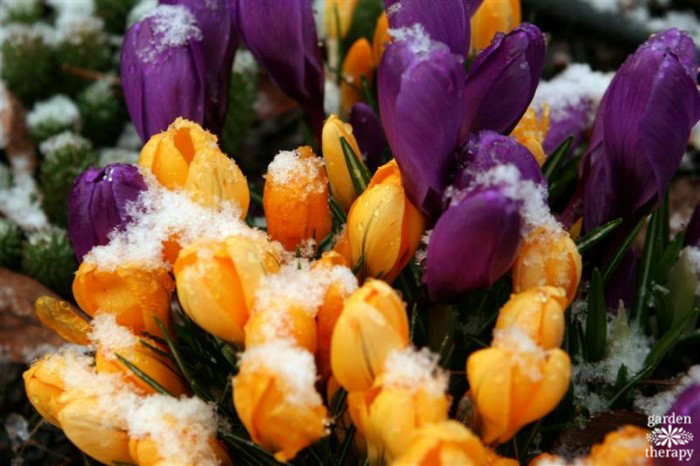
It’s not uncommon to see both crocus flowers and snow at the same time. Not only are they one of the first bulbs to emerge in the winter, but they’re also one of the first flowers overall.
When not much else is flowering, they are a key source of early-season pollen and nectar for honeybees, bumblebees, and solitary bees. In late winter and early spring, many ground bees return from their dormancy. They need the vital energy from these early flowers when they wake up for the upcoming season.
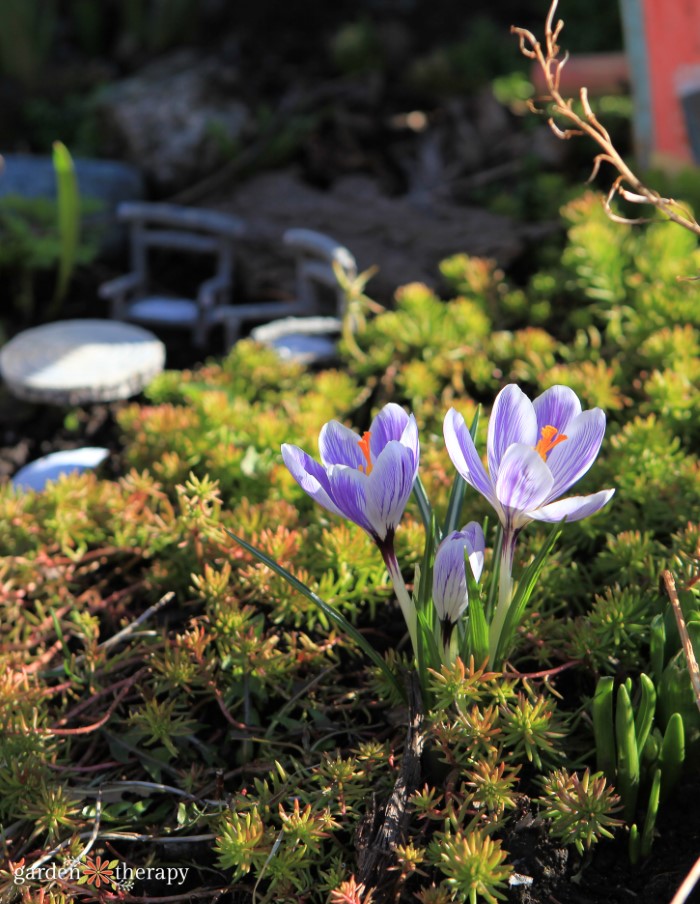
Since they open best with bright sunlight, make sure to plant crocus corms in full sun so the bees can get the most out of the crocus plants.
Inspiring the Next Generation
When I met with the children, they were buzzing with energy. They had finished their day at school and were excited for what we had in store.
I was pleasantly surprised by how much they already knew about bees and their love of flowers. It was my goal to take it one step further and talk about why bees need food and how we can support the pollinators and the local bee population in our gardens.
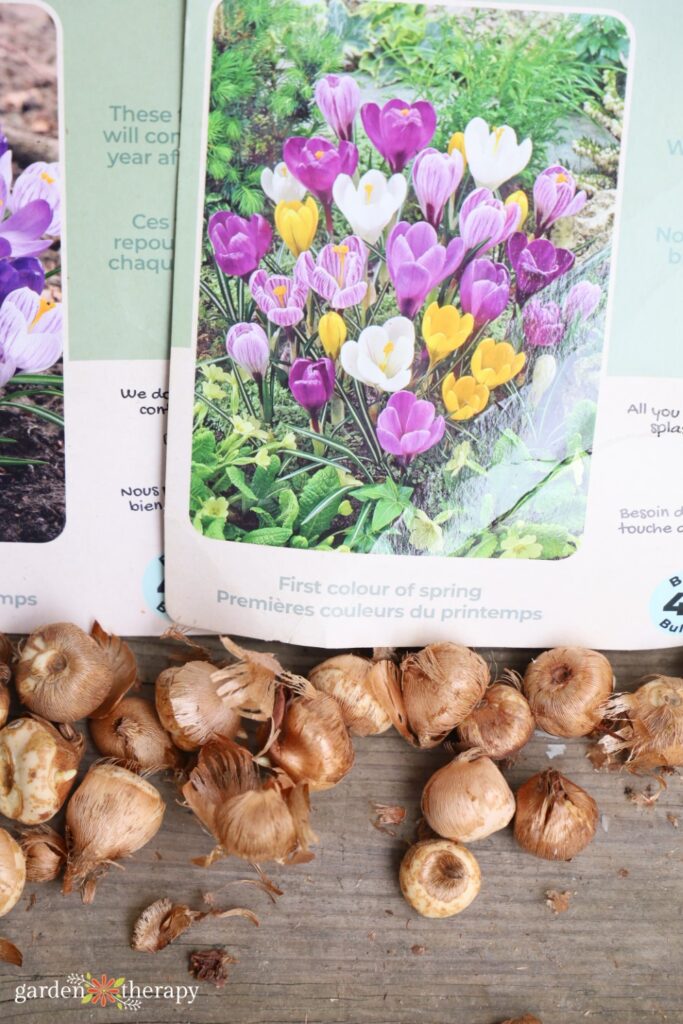
Corms are weird-looking things and a brand-new concept to most kiddos. I showed them the crocus corms and how they’re a big bundle of energy that hibernates for the winter, just like bears or squirrels. They go to sleep for the winter, have a cold rest, and wake up shiny and bright in the spring.
To the group of girls who shouted out that the corms looked like onions, you’re absolutely right! Onion bulbs are stored energy under the soil, and if you leave them in the ground, they will sprout and grow just like a flower bulb.
By the end of the day, the kids could name the crocus flower and were excited to see it bloom next spring. They were passionate about making these little bee cafes and held so much wonder throughout the whole afternoon.
How to Make Bee Breakfast Planter Pots
To make this special day happen, I worked with a local art studio in North Vancouver, Paper Crow Creative. In addition to hosting workshops for adults, they have a stellar after-school art program for kids.
The owner, Julie, and her amazing team of artists are a creative treasure trove. When I shared my idea for the bee cafe with crocuses and annuals planted on top, the art team took over the decorating. Julie suggested wooden signs for each of the pots and adding pottery bee cups to serve water at the cafes! The team designed and made the signs and bee cups, then the kids painted them after planting the pots. These cute little pots will look great as fall decor and again in the spring, adding a little burst of crocuses.
Materials
- Outdoor plastic pot with drainage holes and tray
- Potting soil
- Crocus bulbs
- Fall annuals
- Bee sign
- Bee cup
Make It!
To start, you’ll want a planter that is designed for outdoor use. It’s going to be sitting outside during the winter, so it needs to be sturdy enough to handle the conditions. It should also have drainage holes and a drip tray below.
If the pots will be undercover and won’t get much water over the winter months, it’s okay to leave the drip tray on. But if they will be outdoors in a rainy climate and without a cover over them, take the tray off to ensure there isn’t a puddle of water constantly at the base of the corms.
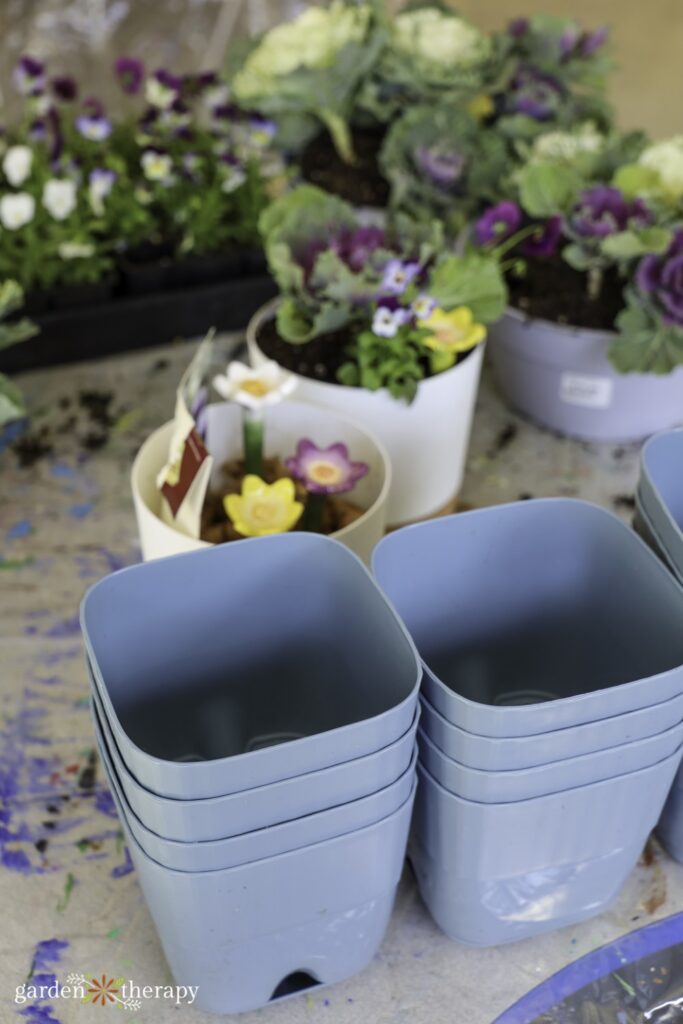
For this project, we did small pots. They’re only 8 inches in diameter but could hold 10 crocus bulbs, since you can plant them close together when they’re in a pot. Crocus can grow in a small space as long as you keep them watered during the growing season.
Add a layer of potting soil to the bottom of the pot. Crocus corms should be planted roughly 12.5 cm deep, but follow the instructions on your package for depth requirements. Make sure to place the crocus corms pointy side up.
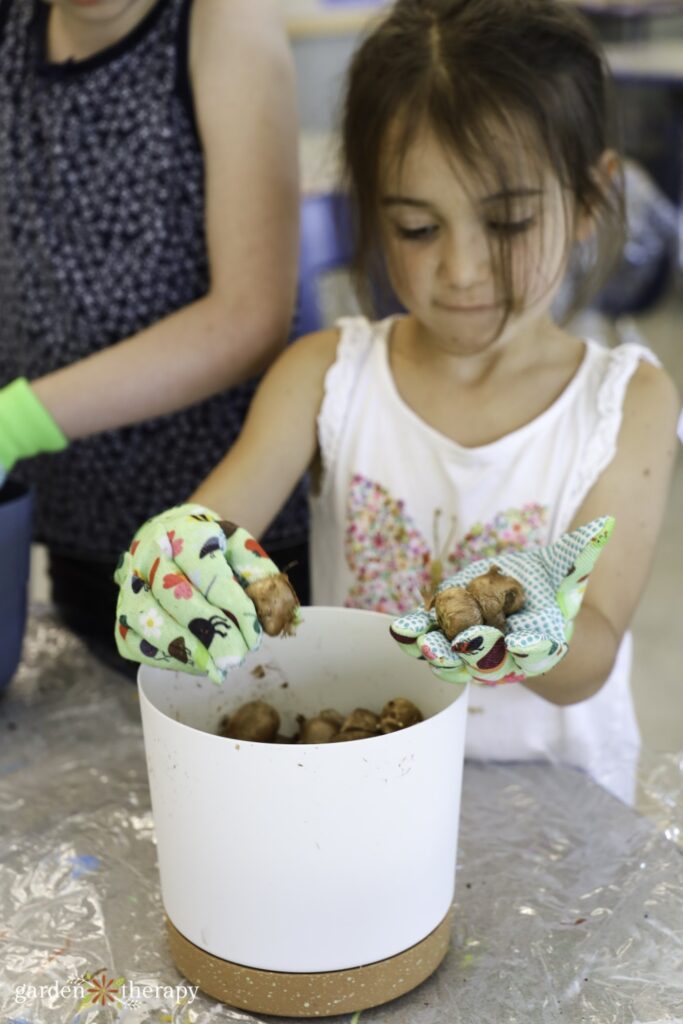
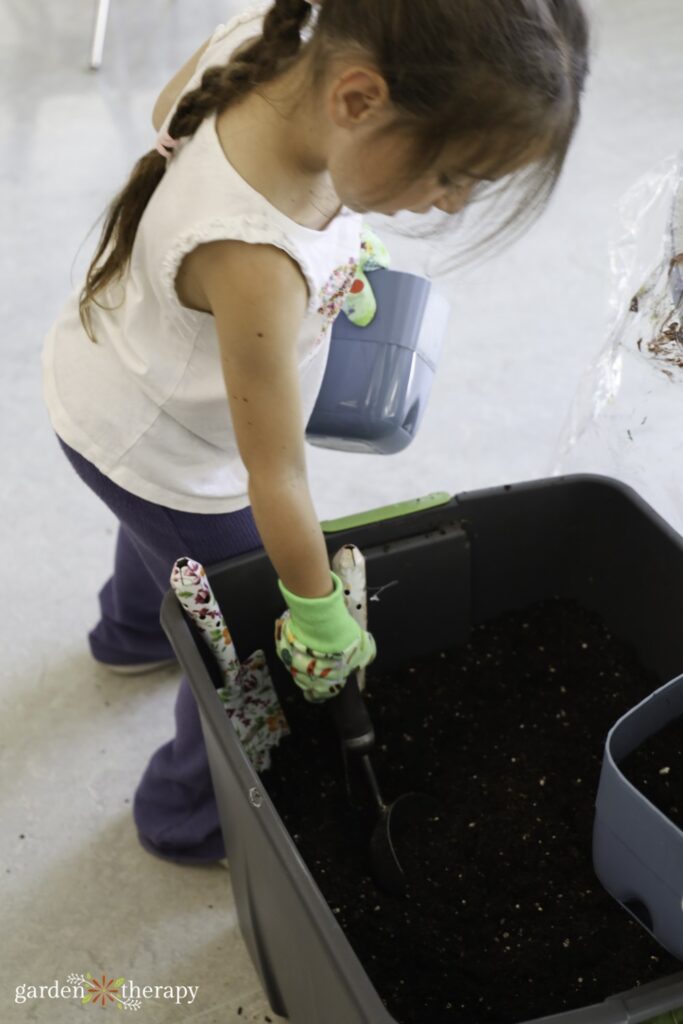
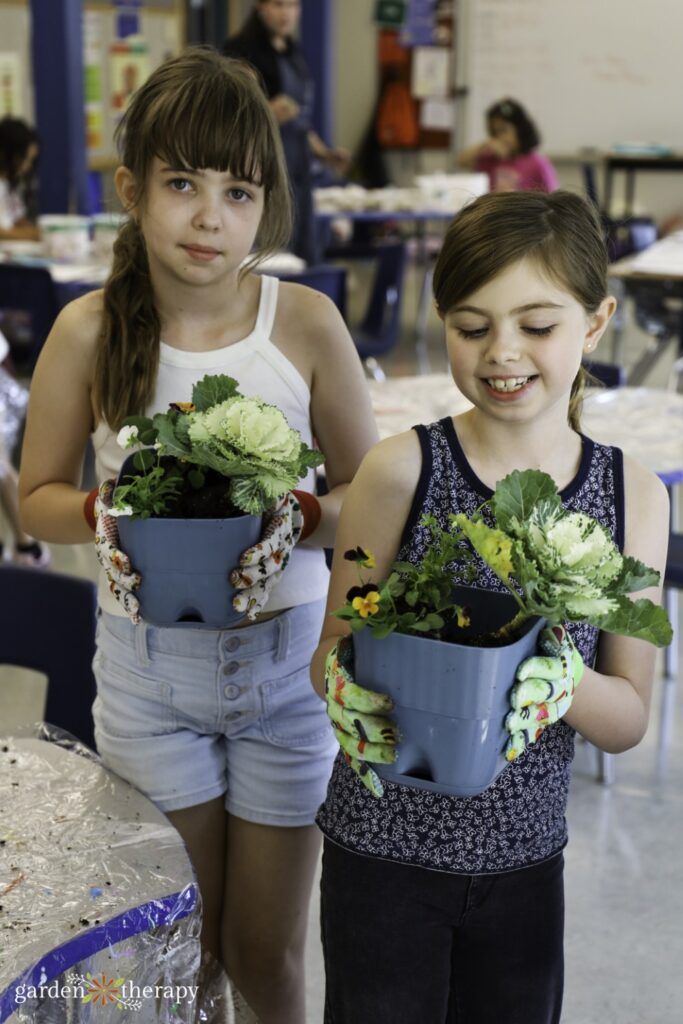
Cover your bulbs with another layer of potting soil. This is when I really saw the kids get into it. They had a lot of fun going back and forth filling up their pots with soil. Watching their excitement and joy gave me such a deep satisfaction, as I could literally see these young minds finding their love for nature.
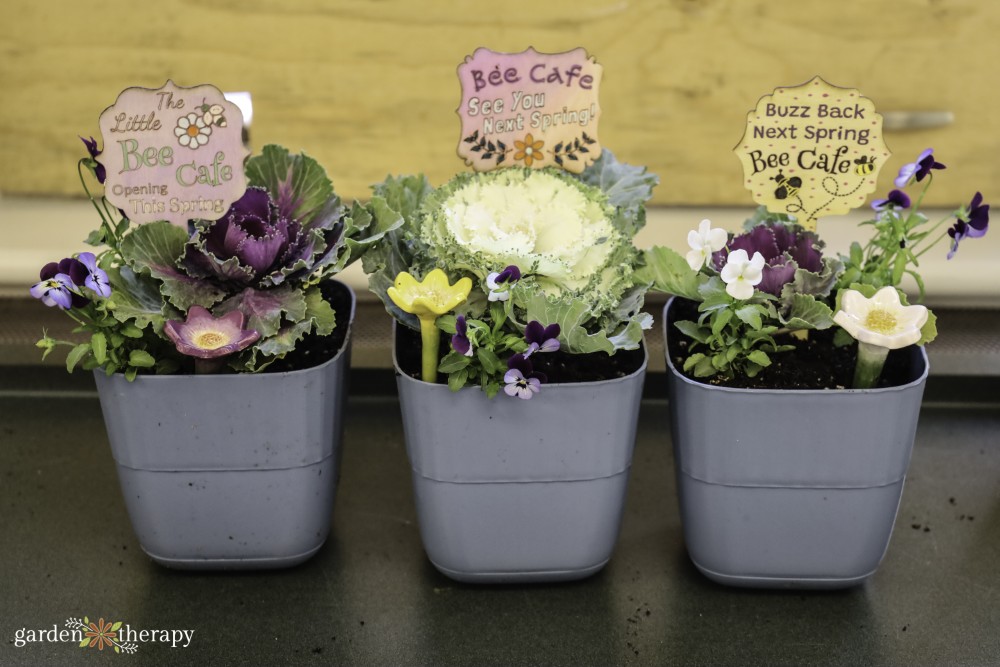
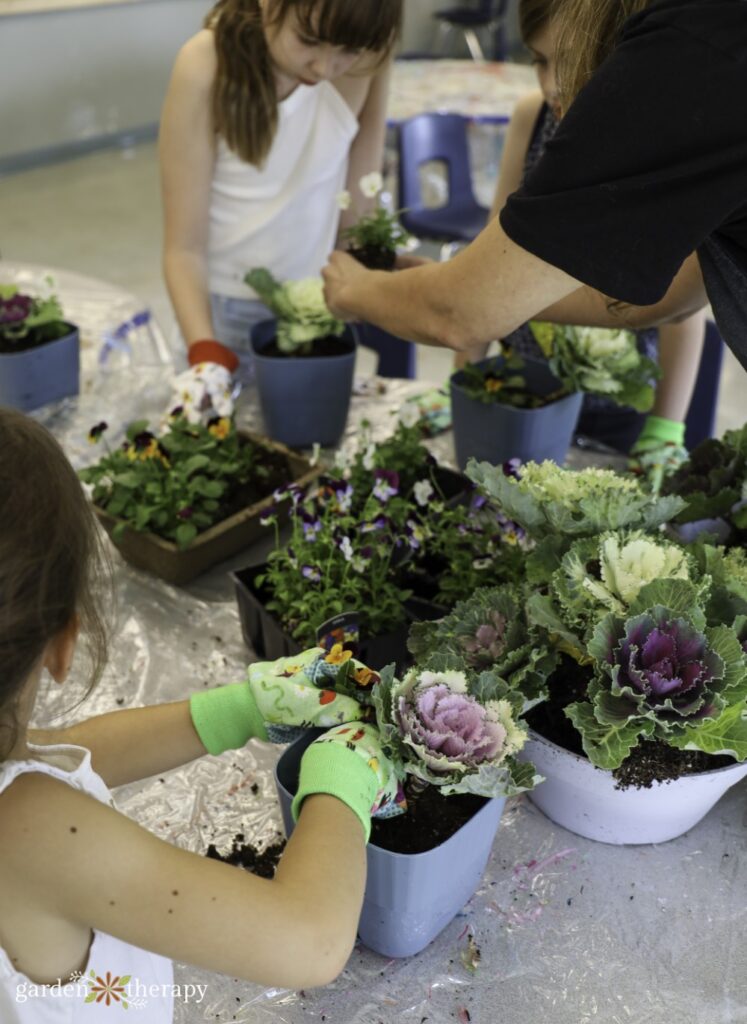
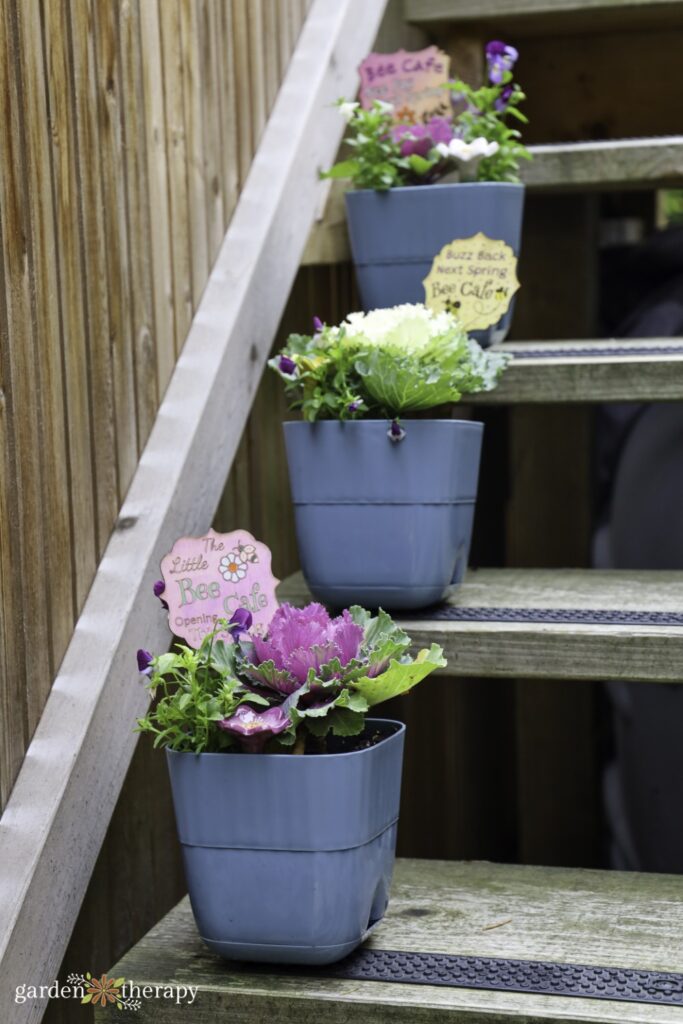
Since the bulbs won’t come up until the spring, I like to add some fall annuals to dress up the top of the planter. This way, it can brighten up the porch or deck in both the fall and spring. I chose ornamental cabbages and some violas for extra colour.
Now every time the kids pass by, their eyes will be drawn to these beautiful planters and be reminded that there’s more to come next spring.
You can also take this project and put it in a larger container for your porch, layering different kinds of bulbs. Check out this post for more details on how to layer bulbs in a container.
Decorating Your Planters
After the kids planted their containers, we had fun decorating them! Paper and Crow Creative made these laser-cut signs perfect for a bee breakfast:
Buzz Back Next Spring: Bee Café
The Little Bee Café Opening This Spring
Bee Café: See You Next Spring
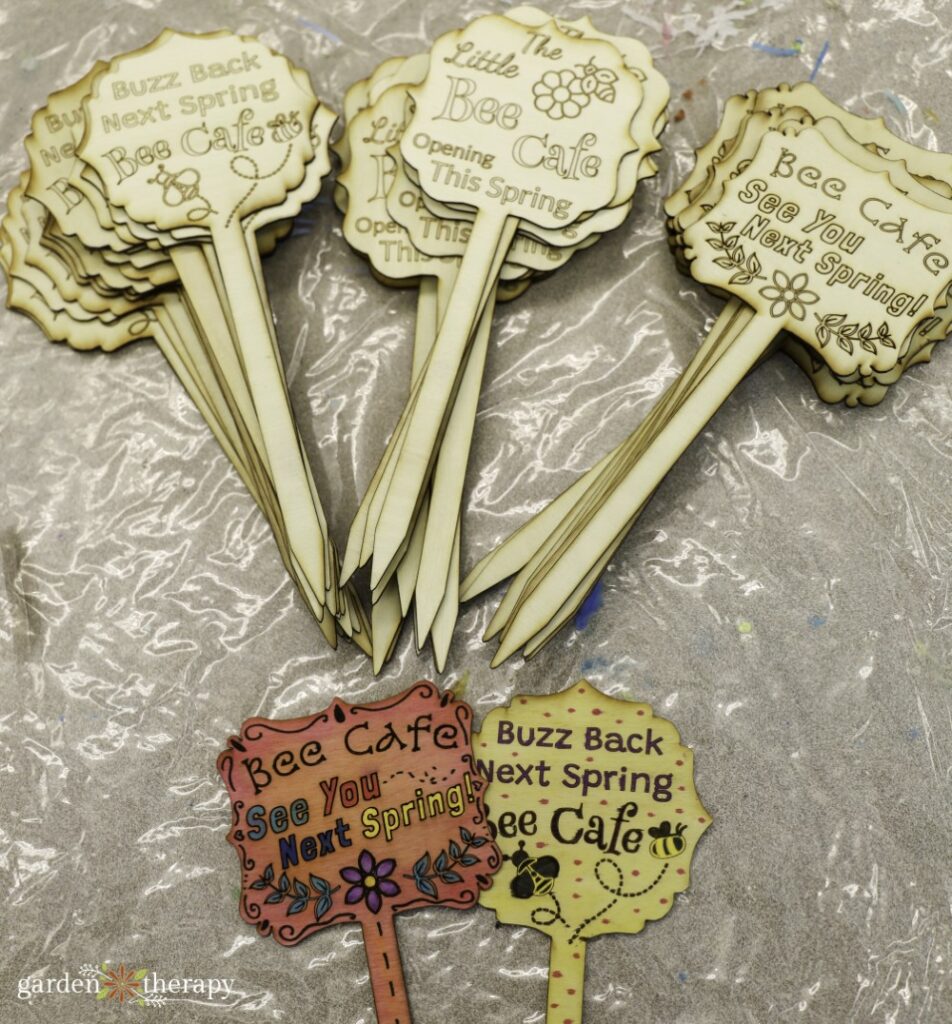
This helped remind the kids why these planters are important and made them look more personalized. These wooden signs were perfect because they will last well through the winter.
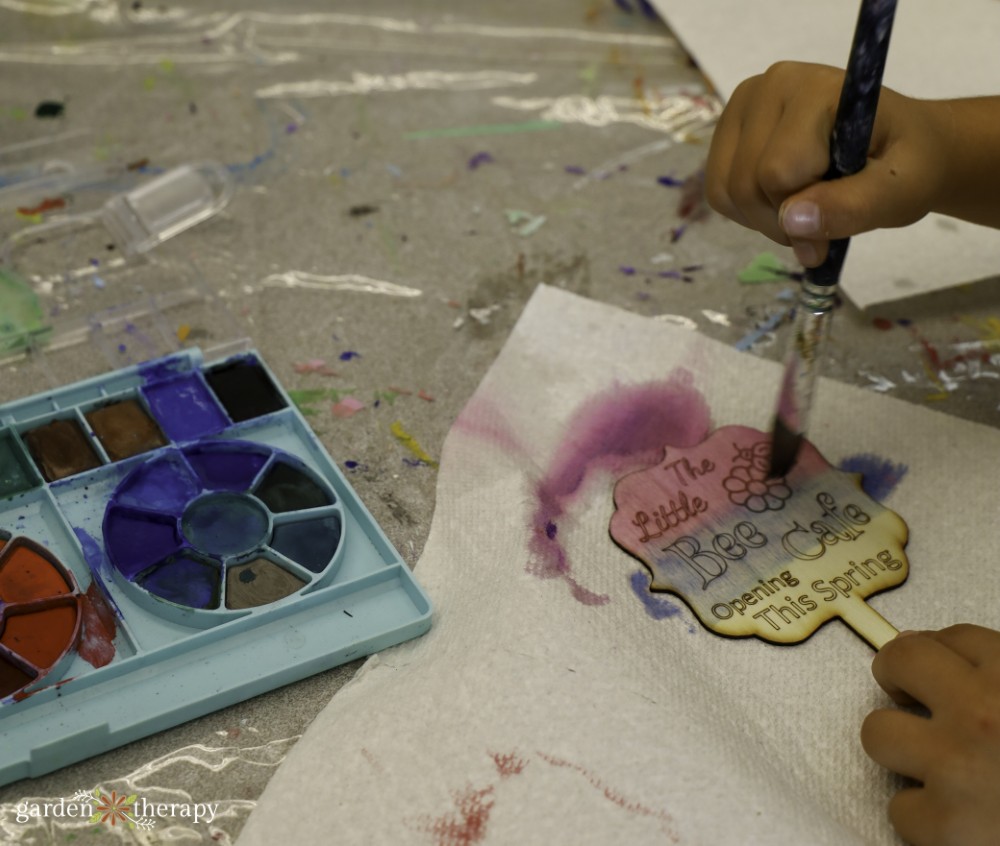
The kids then got to paint their signs. I highly recommend paint pens or permanent markers to make decorating and writing super easy.
I imagine you can find a similar style of wood sign at the dollar store, or like these ones I found online.
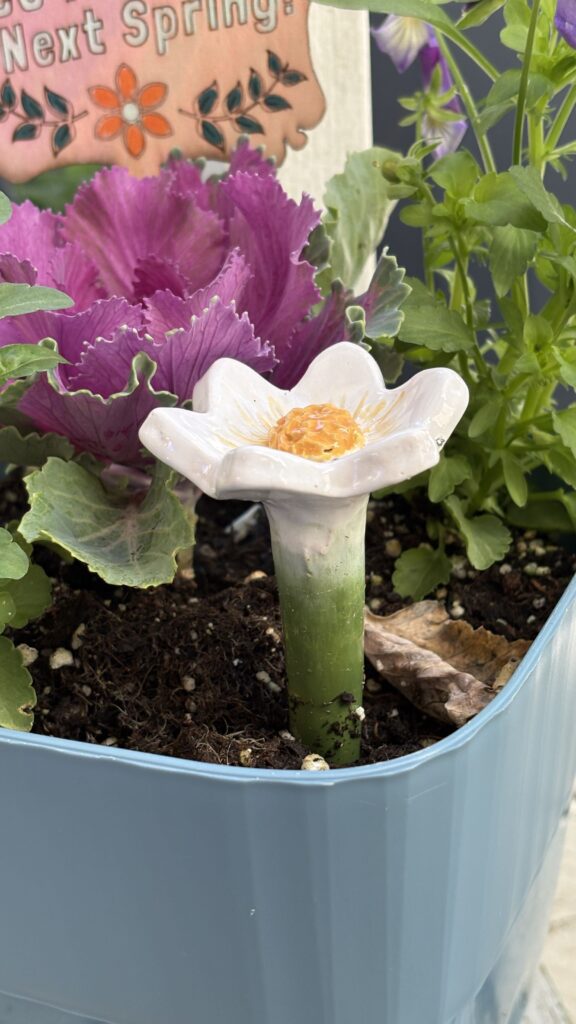
We also made these adorable bee cups, which serve as a small water collection where bees can perch and drink water. They’re so cute that I’m going to dedicate a whole post and tutorial on how to make them, so stay tuned soon for that!
While this project is my favourite because it teaches kids about bees and the importance of pollinators, I also loved it simply because it’s fun. Society often overlooks the value of arts and creativity, and it was a pleasure to dedicate an afternoon to crafting and creating with these kiddos.
Caring for Your Bee Breakfast Planters
The best thing about bulbs is how low maintenance they are once you’ve planted them. For these pots, the most important thing to remember is to water the annuals on top.
The cabbages should last around a month. Since the cabbages are so big, you don’t want them to take up all the soil. Cutting them allows for the crocus to have some nice growing space ahead of the spring.
Cut them back with pruners and leave the roots in place. This way you won’t disturb the crocus corms beneath.
After your annuals are gone, you don’t need to worry about watering. In most cases, the winter rain or snow is enough to keep them just wet enough without rotting. If the pot is under cover from the roof, only water if the soil is very dry.
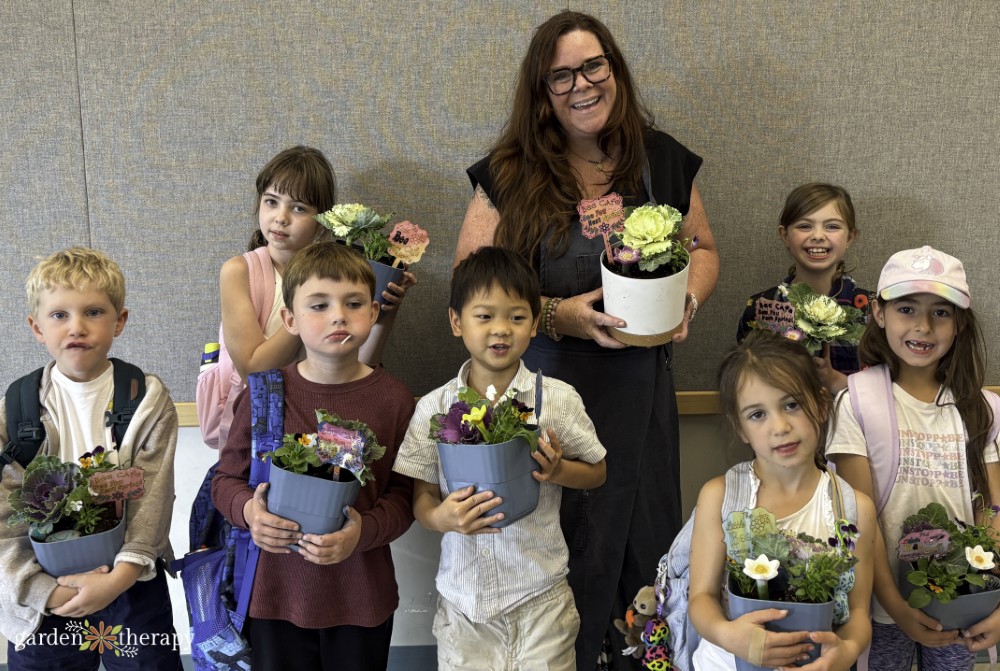
Every single time the kids walk by these adorable little pots with their handmade signs and bee cups, they’ll remember the feeling of planning for the future and why they made these pots. When the crocus bulbs come up next spring, they’ll be filled with pride.
I’m very grateful to Flowerbulb.eu for helping bring this project to the kids and showing them how special the crocus flower can be.
More Fall Bulb Inspiration
- Planting Crocus Flowers: The Spring Bloom Everyone Must Grow
- Plant and Overwinter Spring-Flowering Bulbs in Pots
- Beyond Tulips: 12 Extraordinary Spring-Flowering Bulbs to Plant in Fall
- How to Find Specialty Fall Bulbs (Even If Your Garden Centre Doesn’t Carry Them)
- My Fall Bulb Master Guide (for Spring Blooming Flowers)


A city girl who learned to garden and it changed everything. Author, artist, Master Gardener. Better living through plants.