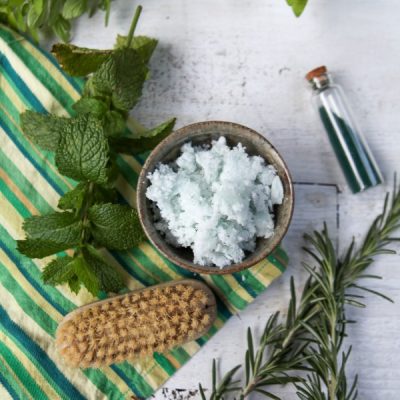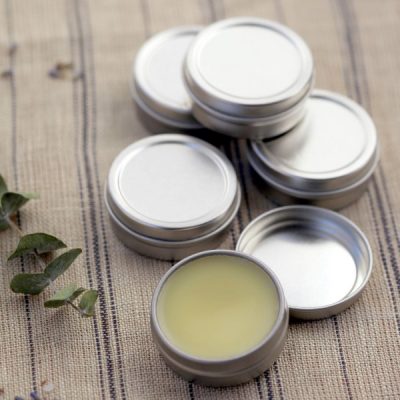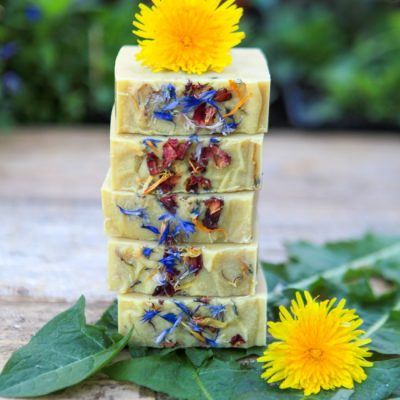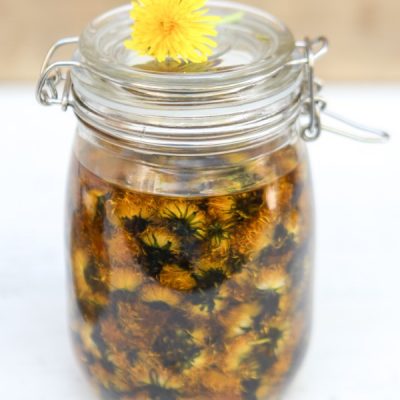
If you come in from the garden with dirty, achy feet then this herbal soak is for you. It stores well in a pretty jar but packs a powerful punch of soothing herbs in a foot bath. And why should feet have all the fun? You could surely use it in the tub too. Ahhhh.
Gardener’s Herbal Foot Soak Recipe
Hemp & Honey Lip Balm
This week I tried another recipe from the current Book Club selection, A Green Guide to Natural Beauty, Hemp & Honey Lip Balm.
For ages now I’ve been making manuka honey lip balm because of the extraordinary healing properties of the magical golden goop. Hailing from New Zealand, manuka honey comes from bees that pollinate the Leptospermum scoparium, a shrub or small tree that can grow up to 4m tall with profuse star-shaped flowers. Manuka honey is claimed to have anti-bacterial, anti-fungal, and anti-microbial properties. Applied topically, it is said to promote healing and reduce inflammation, with some sources saying it even prevents or heals the cold sore virus. While I’m not able to quantify these claims, I can say that it makes a darn good lip balm and that’s good enough for me.
Photo credit: Avenue
Raw manuka honey is rated using “Unique Manuka Factor” (UMF) that rates the antibacterial factor. I generally use UMF 16+ as that is the highest that is sold in these parts.
Now the book clearly states that this recipe makes a softer lip balm, suitable little pots not tubes, but since I only had tubes I added more beeswax and some carnauba wax. It is still a bit soft but holds up fine in the tubes if you don’t smash it on your lips like my dear husband did this morning. The worst that’ll happen if you are a bit rough is you’ll get a bit too much applied but it will still hold its shape.
Hemp & Honey Lip Balm
adapted from A Green Guide to Natural Beauty recipe p. 65Ingredients:
- 15g beeswax
- 1g carnauba wax
- 10g cocoa butter
- 5g shea butter
- 20ml almond oil
- 5ml hemp oil
- 10ml manuka honey
- 8 drops citrus essential oil
Equipment
- Double boiler
- Metal spoon
- Small glass jug
- 12 lip balm tubes or 4 pots
- Digital kitchen scale (this wasn’t listed in the recipe but it is essential for weighing your ingredients)
- Milk frother
Instructions:
1. Melt the beeswax, carnauba wax, cocoa butter & shea butter in the double boiler along with the almond oil.
2. Add hemp oil and honey and stir until liquid. The recipe notes that as honey is not soluble with oil, it won’t totally dissolve with heating and needs to be mixed with the milk frother.
3. Remove from heat, add essential oils, and blend with the frother while the mixture cools but still pourable.
4. Pour into tubes and leave untouched to set.
Review 4.5/5
Almost perfect! This recipe is really wonderful and made a very moisturizing lip balm that feels silky and lasts a really long time, hours actually.
There were two small issues that added up to the half point from perfect rating. First, the hemp oil aroma is, well, hempy. Yick. So that’s why I added the essential oils. I wish the honey had a stronger aroma but…the second issue was that they honey really doesn’t combine that well. I’m pretty used to this from making lots of honey lip balm. In my experience the honey sinks to the bottom of your jug, even with mixing constantly, and by the time you fill the last tube it’s just a sticky honey mess (shown below). There is definitely some honey in the rest of the tubes though, you can tell just by licking your lips.
There are also a few other interesting looking recipes in the book: a bee-free version, cocoa butter lip balm sticks, and chocolate orange lip pots (um, yummy). Please drop me a note if you try any of these, I’d love to hear all about it.
Previous recipes tried from this book were the Apricot Face Scrub (2/5) and Mango Lime Body Butter (5/5).
Please check out the Garden Therapy Book Club page for more information on our next book, Weekend Handmade.
A Green Guide to Natural Beauty + Mango Citrus Body Butter Recipe
It’s time to review our very first Garden Therapy Book Club book, A Green Guide to Natural Beauty: 35 step-by-step projects for homemade beauty by Karen Gilbert.
There are many different types of books we will be looking at in Book Club, but when the book is DIY or project-based, then the best way to test it out is to give the projects a try. As the title suggests, A Green Guide to Natural Beauty boasts 35 different natural beauty projects, which made it very appealing given that I’ve been aiming to make as many of my bath and body products as I can. As part of the Natural Skincare Series I’ve shared recipes and tutorials for soap, scrubs, and bath products all made with natural ingredients, and where possible ingredients from my garden.
First and foremost this book is beautiful. The photography is stunning and while those who love lots of bright colour may find the pages a tad on the beige side. There is a reason for this, however, as the projects listed use natural ingredients (read: no crazy colorants or unnatural fragrances). I’m happy to keep my colour in the garden and the purest products on my skin, so I really the look of natural-coloured skincare products. The first chapter of this book discusses natural skincare in detail: equipment, ingredients, preservatives, and shelf life. All in all this is a great summary and provides a great deal of background into the benefits (many) and drawbacks (mainly preservatives and shelf-life) of natural products. This section is worth a good read.
The rest of the book covers recipes and detailed instructions with photos on Chapter 2: For the Face, Chapter 3: For the Body, and Chapter 4: Bath and Shower.
I picked two recipes to try: Apricot Face Scrub (Chapter 2) and Mango Lime Body Butter (Chapter 3).
Apricot Face Scrub Recipe p. 60
This fairly simple recipe only required a few minutes to make, as long as you have the ingredients. The ingredients aren’t that common, but since I have a natural products guru who I buy from, I was able to secure everything quite painlessly. The concept is to mix apricot kernel oil, caster oil, and manuka honey with kaolin (white clay) and ground rice to make a paste. They drawback with this recipe is that it will only last a few days and must be stored in the fridge to preserve it, so Karen suggests making only a tiny quantity at a time.
Review 2/5
While the recipe is super easy to make, all-natural, and fairly inexpensive, I didn’t like the feel of the product. The ground rice is a bit harsh on the skin (she suggests trying ground oatmeal for a gentler scrub), and the oil leaves my face feeling unpleasantly greasy. I’ve used it every day for a week and must wash afterwards with my homemade soap. My face feels pretty good after washing a second time and moisturizing but I am still on the lookout for a different cleanser/exfoliatant recipe that suits my needs more.
Mango Citrus Body Butter p. 78
This recipe is listed as mango and LIME body butter, but I added a citrus essential oil blend which had an even balance of lemon, lime, sweet orange, and tangerine.

Ingredients:
- 10g beeswax or jojoba wax
- 25g cocoa butter
- 30g shea butter
- 25 g mango butter
- 1 tsp almond oil
- 1 tsp vitamin E
- 20 drops citrus essential oil (recipe suggested 10 lime, 5 sweet orange, 5 lemon)
Equipment
- Double boiler
- Metal spoon
- Airtight 100ml jar
- Digital kitchen scale (this wasn’t listed in the recipe but it is essential for weighing your ingredients)
Instructions:
1. Melt the beeswax, cocoa butter & mango butter in the double boiler. Leave mixture over a gentle heat for 20 minutes to prevent the butter from going grainy when it cools.
2. Add the almond oil and vitamin E and heat for a few more minutes until completely liquid.
3. Remove from heat and add essential oils, stirring thoroughly
4. Pour into jars and leave to set.
Review 5/5
Five stars! This recipe is great. It’s easy, smells delightful, and makes your skin feel amazing. Some people may be adverse to the oilyness that takes a bit of good massaging to rub in, but I don’t mind in the least. My skin feels delightfully soft if I apply right out of the shower and it is even healing my dry heels after a week of use when no other moisturizer has.
In summary, I liked this book a great deal and I may try a few more recipes. I will post about them if I do. In the meantime please share your experiences with the projects listed here or in A Green Guide to Natural Beauty, if you have a chance to try out the recipes, by leaving a comment on this post.
DIY Bath Bombs
Love those awesome fizzing bath bombs but don’t want to spend $6 a piece? It’s easy to make your own with natural ingredients that soften your skin.
As this recipe is part of the Natural Skincare Series the ingredients are natural and safe. While there are many other recipes that recommend using synthetic fragrance and coloring, there are many options available that are 100% natural and will not harm you when absorbed into your skin.
You can feel confident that when you use these natural products, or give them as gifts, that they are healthy for the body.
Ingredients / Materials:
- 2 cups baking soda
- 1 cup citric acid
- 100% pure witch hazel
- spray bottle
- 10-20 drops of 100% pure essential oils (do not use fragrance for any bath or body products)
- natural colorant (green=spirulina, yellow=turmeric, purple=ratanjot)
- plastic moulds

Instructions:
1. In a large bowl, measure in the baking soda, citric acid and mix well.
2. Add a 1/2 teaspoon of coloring and mix well. Add more colouring if you want a deeper colour, but keep in mind that too much coloring will leave a ring in your tub, so go easy. The color will become more pronounced when you add the witch hazel anyhow.
3. Add 20-30 drops of essential oils and mix well.
4. Using a atomizer or spay bottle filled with which hazel, spray the entire surface of the powder mix and mix with your hands. Keep spraying and mixing rapidly until the mixture holds together when scrunched with your hand (think of making snowballs).
5. Working quickly, firmly press mixture into moulds. You can use soap-making moulds, chocolate moulds, ice cube trays, or even plastic Christmas tree ornaments that snap into two parts. The key is that they are plastic and large enough for the bath bomb to combine and set.
6. Gently tap the mould so that the bath bomb releases and carefully lay on a towel or tray to dry. To make a round bath bomb, over-fill two moulds and press them together firmly before tapping the mould to release the bath bomb.
7. Let the bath bombs dry for 30 minutes or until they are firm and won’t fall apart.
Tip: use the extra powder from the bowl and counter and shake it into carpets or rugs, then vacuum. Instant deodorizing!
Simple Sugar Scrub Recipe
As part of the Natural Skincare Series, here is an uber-moisturizing, exfoliating sugar scrub recipe that will wake up your skin and your mind with two energizing scent choices: lemongrass/ginger or rosemary/spearmint.
Materials:
- small 1/4 pint (125ml) jam jars
- 1 cup granulated white sugar
- 3/4 cup sweet almond oil
Lemongrass Ginger Recipe Ingredients:
- 3 drops of lemongrass essential oil
- 1 drop of ginger essential oil
- 1/4 tsp turmeric for coloring
Rosemary Spearmint Recipe Ingredients:
- 2 drops of rosemary essential oil
- 2 drops of spearmint essential oil
- 1/4 tsp spirulina for coloring
- 1/4 tsp crushed dried mint leaves and bergamot petals
Directions:
1. In a bowl or large 1L measuring cup mix together the sugar, oil and recipe ingredients.
2. Spoon mixture into small jam jars and smooth out top.
3. Optional: download and print these freebie canning labels to dress them up!
Easy Homemade Bath Salts Recipe
Making fragrant jars of homemade bath salts couldn’t be easier. In vintage mason jars, bath salts look beautiful on display and make wonderful gifts. Here is a recipe to make your own as part of the Natural Skincare Series.
Materials:
- Epsom salts
- 100% pure lavender essential oil (not fragrance)
- dried lavender
- vintage mason jars
Cold-Process All-Natural Handmade Soap
Nourishing all-natural soap makes a wonderful gift for yourself and others. Check out these recipes for Lemongrass Ginger Coffee Kitchen Soap, Rosemary Spearmint Energizing Shower Soap, and Orange Vanilla Cinnamon Soap. With natural vegetable ingredients, pure essential oils, natural colours, and herbs from the garden, you can feel good about taking care of those who use your handmade soap.

Ingredients
Start with a basic soap making recipe such as these available on the Internet:
Or through a book:
- Soap Maker’s Workshop: The Art and Craft of Natural Homemade Soap
- Soapmaking the Natural Way: 45 Melt-and-Pour Recipes Using Herbs, Flowers & Essential Oils
- Basic Soap Making: All the Skills and Tools You Need to Get Started (Kindle)
Or use a pre-weighed soap making kit. If you are in Vancouver, you can get a great kit with all natural ingredients from Scentimental Creations. This is simply the easiest way to successfully make soap in a short amount of time.
Soap Making: Cold Process Method
1. If you are not using a kit, the first and most crucial step in cold-process soap making is to weigh the raw ingredients (fats, lye, water) precisely. Prep everything that you will need and lay it out accessibly before you begin.
2. It’s best to wear protection when making soap as lye can burn your skin. Until the oils and lye have turned into soap (48-hours after making the recipe) it’s best to protect yourself. Always wear rubber gloves, safety goggles, and keep area free from kids and pets.
3. OILS: Gently (aka slowly) heat oils in a stainless steel pot on the stove. Alternatively, use a microwave and heat for 2 minutes on high, and then at shorter intervals until you reach the temperature listed in the recipe.
4. LYE: Using room-temperature distilled water, weigh the amount specified by formula into a heat-resistant glass bowl or large Pyrex measuring cup. While stirring, slowly add measured amount of lye. SLOWLY. Stir until dissolved. This mixture will get super hot and quickly so be mindful of that. Also, the fumes are terrible, so if you can stir from below the fumes (with lye on the counter and you crouching below as you stir) with windows open that would be best. Place glass containing in an ice water bath and cool to required temperature. Get accurate temperature readings with a candy thermometer in the middle of the solution.
5. When both oils and lye/water are at the required temperatures (as stated in your recipe), slowly pour lye/water into the oils while rapidly stirring in small circles. Always add lye/water to oil, not the other way around.
.
.
6. Continue to rapidly stir the mixture until it thickens to the consistency of pudding (called tracing). The mixture is ready to be molded when a drizzle mark from the spatula remains for a few seconds on the top of the mixture. Speed up the tracing process by using a hand blender to mix. Be careful not to over mix.
7. Add essential oils, natural colorants, and herbs or exfoliants at this stage (see recipes below). Work quickly as the mixture will quickly start to thicken. The ingredients you add should be good for your body so avoid perfumes, fragrance, and artificial colors. Your hand-made natural soap is best scented with pure essential oils and colored with natural dyes as outlined in the recipes.
8. Pour mixture into 1L milk cartons and staple the tops shut. Wrap the cartons in a large towel and set somewhere warm for 48 hours like the top of the fridge. The cartons will feel warm and will get hot as the mixture neutralizes and turns into soap.
.
9. To unmold your soap, peel off the milk cartons and cut each full 1 liter carton lengthwise into 3 equal sections for shower soap, and 4 equal sections for hand soap. Flip each section so that it appears to be a square from the top, and cut into 3 equal sections.
10. Place each bar on a wire rack in a cool, dark place to cure for 3 weeks.
11. After 3 weeks, soap can be buffed with a cotton cloth and wrapped for gifts.
Soap Recipes
Lemongrass, Ginger, and Coffee Kitchen Soap
- Add 1 tablespoon dry, finely ground coffee at trace
- Scent with 15ml lemongrass and 5ml ginger essential oils
- Colour with turmeric
Rosemary and Spearmint Energizing Shower Soap
- Scent with 10ml rosemary and 10ml spearmint essential oils
- Colour with sage powder
- Gently stir in spirulina powder to make a darker green swirl
Orange Vanilla Cinnamon Soap
- Add 1 tablespoon dry, finely ground coffee at trace
- Scent with 7ml orange, 7ml cinnamon, and 7ml vanilla essential oils
- Colour with cinnamon
- Gently stir in cocoa powder to make a chocolate color swirl
All-Natural Chocolate Mint Lip Balm
In my quest to use natural products made as simply as possible, I bought a kit from Scentimental Creations to make my own lip balm. It was so easy that I had 4 pots and 1 tube of lip balm in about 20 minutes. I made 2 types of lip balm:
Chocolate Mint: add 2 drops each peppermint and spearmint essential oils, 1/2 teaspoon of cocoa powder to give it a rich brown shade, and 1/2 tsp of honey to make lips shiny.
Milk Chocolate Mint SPF 25: as above but add 1/2 teaspoon of titanium dioxide before pouring into the pots which will make the balm the colour of milk chocolate and give lips protection in the sun.
The kit contains a moisture oil blend, beeswax, carnauba wax, 5ml essential oil blend (mint medley), 4 containers, and instructions. I LOVE the recipe but if you want to make your own (or want to skip the beeswax) here is a great recipe for Vegan Lip Balm.