

They’re not a vegetable, and they’re not an ornamental…they’re both! Edible flowers are such a fun plant to grow in your garden, especially for someone who loves to cook, bake, or host. They add a little something you just can’t get from the grocery store.
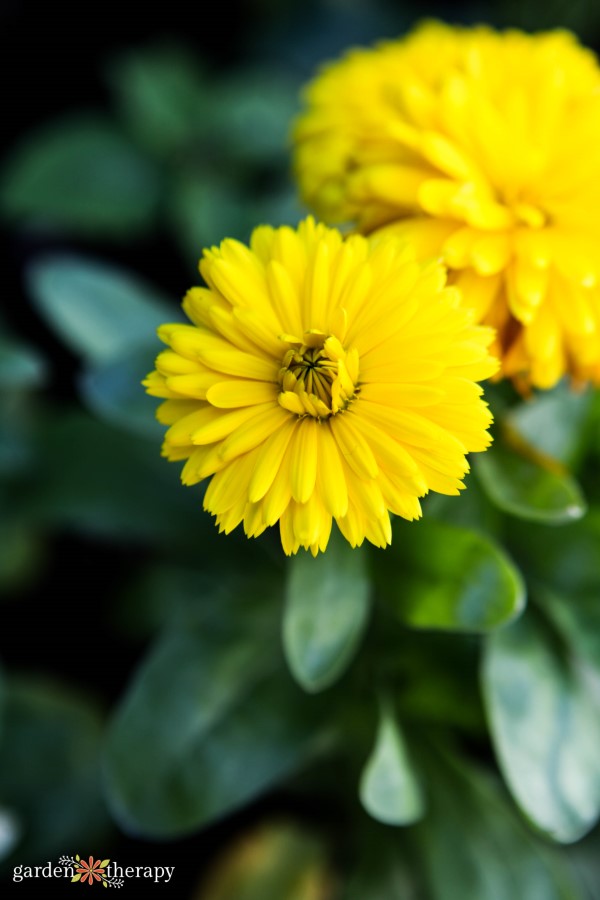
Edible flowers are my current obsession. I’ve been snacking on blooms like kale flowers, sage blossoms, and nasturtiums for many gardening seasons, as these edible flowers are a product of my vegetable and herb gardens.
Last year, I added another layer to my obsession by growing violas and pansies in my lettuce beds; they brightened up the garden and gave me baskets of tasty flowers to add to recipes.
This year, I have gone a little off the rails and planted two different dedicated edible flower gardens! Obviously, I’ve learned a lot about the best ways to use edible flowers, so I wanted to share some of my tips for harvesting, preparing, and storing them for culinary use.
- Growing Edible Flowers
- Harvesting Edible Flowers
- Storing Edible Flowers
- How to Use Edible Flowers
- More Helpful Tips About Edible Flowers
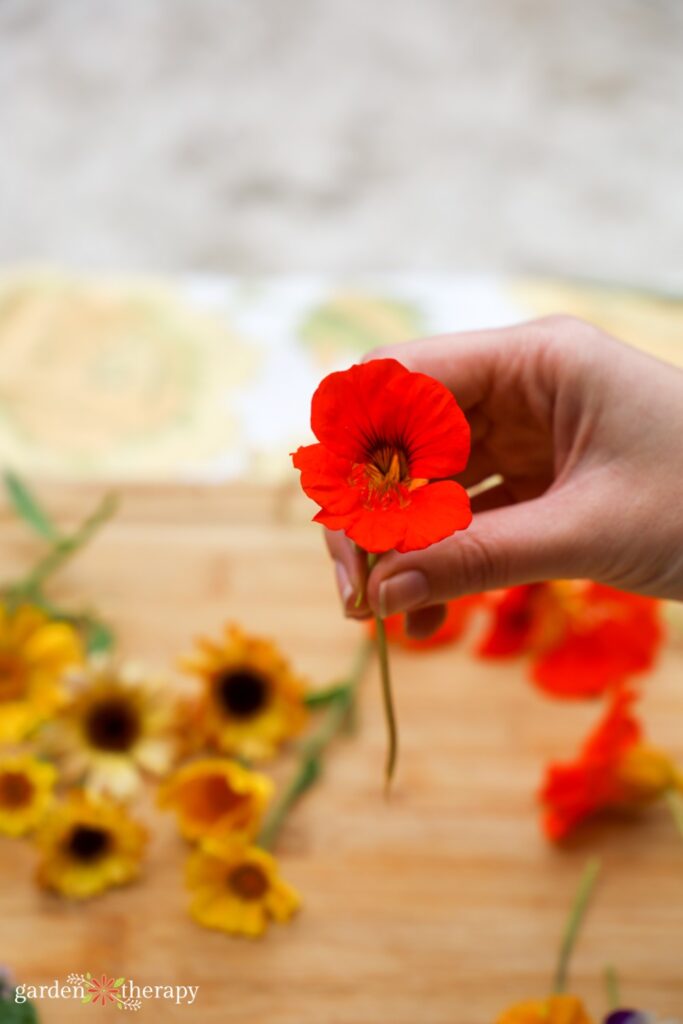
Growing Edible Flowers
Growing edible flowers at home means you’ll be certain that the flowers don’t have any chemicals or sprays added to them. And that’s good news because plants that are classified as “ornamental” could get sprayed with all sorts of yucky things you don’t want to put on your salad plate.
You can grow edible flowers in garden beds, vertical planters, containers, hanging baskets, and even the vegetable garden. Edible flowers look great while blooming, and harvesting them regularly will send a message to the plants to produce more flowers and continue blooming in the garden.
So now that you’ve gone through the steps to grow these gorgeous flowers in your garden, it’s time to get out your snips and put them on a plate.
Harvesting Edible Flowers
Harvest edible flowers for recipes at their peak of freshness: when they have fully bloomed and are not starting to wilt.
Cut them during the cool parts of the day (early morning or late evening). Harvesting when it’s cooler out ensures that you’ll cut the flowers when they have the highest water content, keeping them fresh and perky.
Plan to use your edible flowers within a day of harvesting them. Ideally, they should be cut just before use.
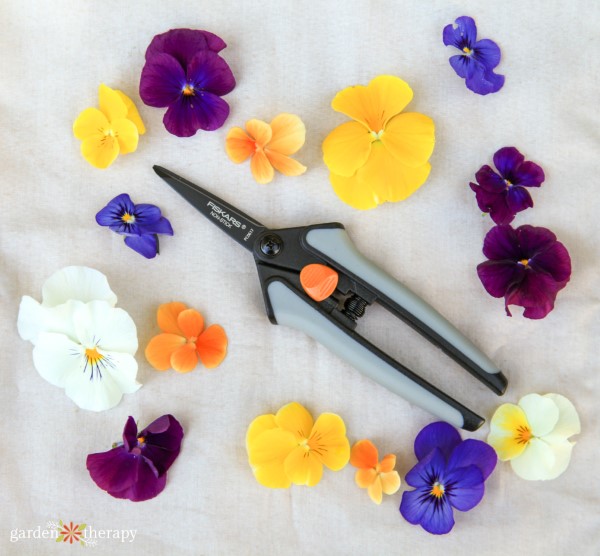
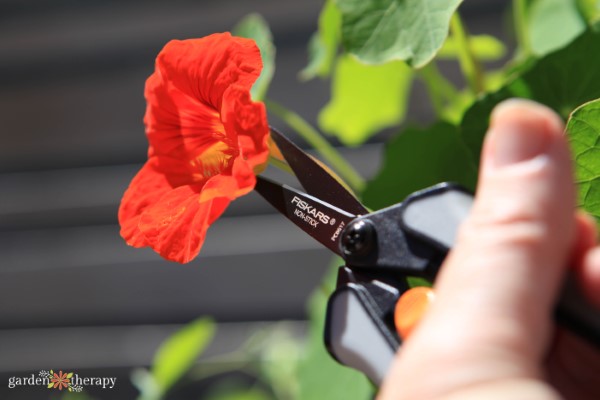
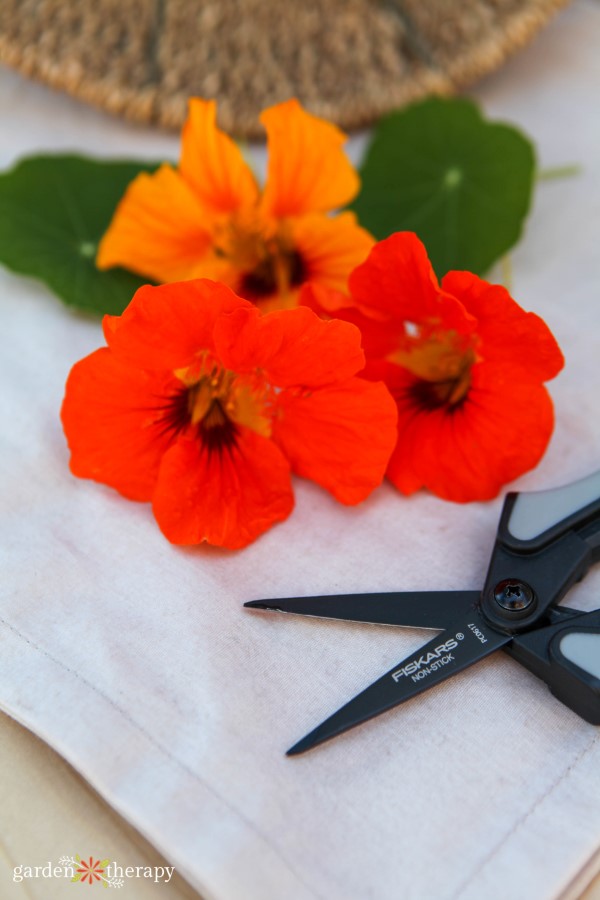
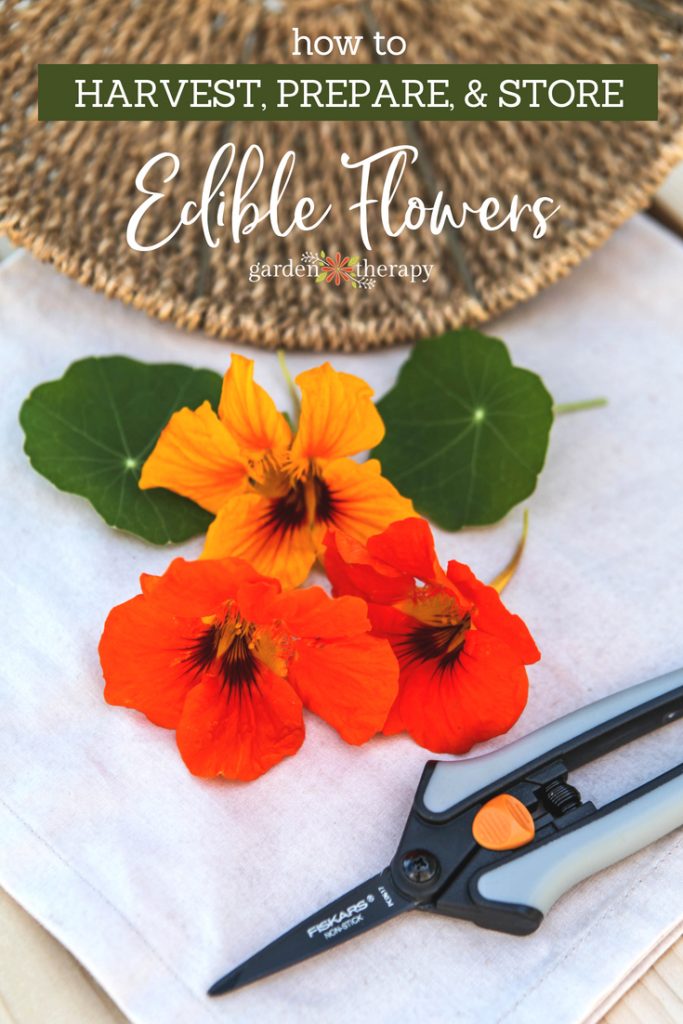
Use a clean pair of micro-tip pruning shears to cut the bloom just below the flower head.
I like using micro-tip snips over scissors because they are both delicate and powerful. I will undoubtedly come across some deadheading or pruning that needs to be done while I’m harvesting flowers, so I like that I don’t have to switch tools. They are small, and I can keep them in my garden apron, and they have a little cap that keeps them from poking me.
Storing Edible Flowers
To help prolong the life of your cut flowers, wet a piece of paper towel and place it at the bottom of a plastic or glass container. Place your edible flowers inside, put on the airtight lid, and set them in the refrigerator until ready to use.
When stored properly, edible flowers can last for a couple of days. Ideally, you want to use them shortly after harvesting them. I like to harvest the day I use them.
How to Use Edible Flowers
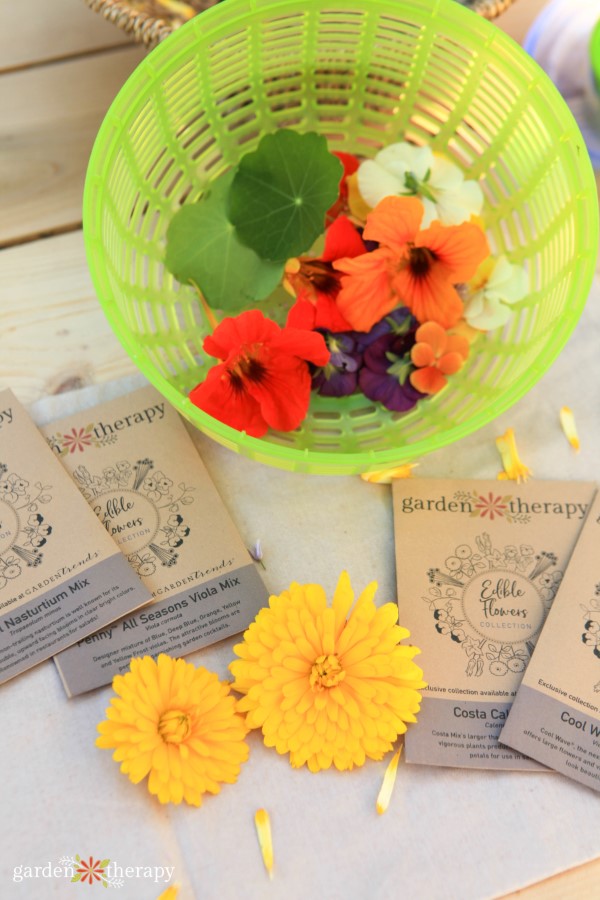
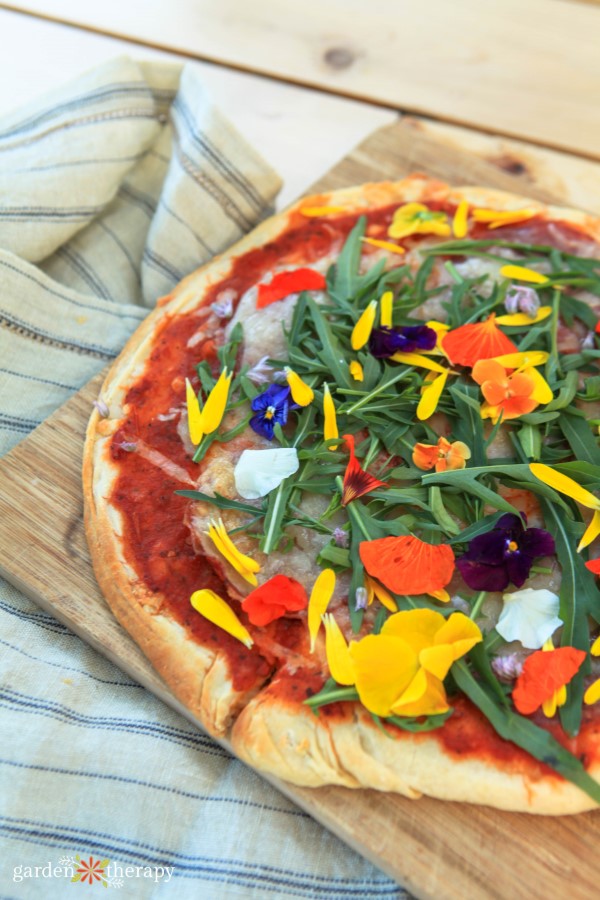
Edible flowers can be added to salads, pizza (sprinkle them fresh on top after cooking), ice cubes, lollipops, cupcakes, and more. Some edible flowers are better in sweet recipes (like violas and pansies, especially sugared ones), and others may work better in savoury dishes (like chive blossoms and calendula).
Here is what the edible flowers I’m growing in my garden taste like:
Nasturtium
- Flavour: peppery
Pansy & Violas
- Flavour: fresh, wintergreen
Calendula
- Flavour: tangy, bitter
Pea Flowers
- Flavour: pea
Zucchini Blossoms
- Flavour: delicate, mild squash
Chives
- Flavour: mild onion
More Helpful Tips About Edible Flowers
- How to Make Sugared Flowers to Decorate Your Desserts and Drinks
- When is it Okay to Eat Fresh Edible Flowers?
- Double Duty Plants: 20 Edible Flowers for Companion Planting in the Vegetable Garden
- A Sweet Garden Party Treat: Edible Flower Lollipops
- How to Make the Perfect Edible Flower Ice Cubes
- The Dirt on Edible Flowers (and the Top Ten You Must Try!)
- Edible Wildflowers: Grow it! Eat it!

A city girl who learned to garden and it changed everything. Author, artist, Master Gardener. Better living through plants.

Thanks for the tips! I’ve tried a few, but not all of these.
Every morning with coffee this is my go to site. I do use fiskars. Tools that are made well.
Catherine, what a compliment! Thank you. <3
I love to put nasturtium leaves on sandwiches. They have a wonderful pepper flavor that is so good with turkey and tomatoes. I grow them in my garden like lettuce or spinach.
Your beautiful photos always inspire me to take on the adventure of trying some of your suggestions. I’ve only started incorporating the plants I grow into what I eat and I love the way they look and taste!
Great information in small doses makes it so much easier to implement.
I enjoy reading your articles and would love to win item to replace one I lost!