

Organic-looking handmade soap topped with natural sea sponges makes for a gorgeous soap that lathers up beautifully. Sea sponges are a natural, biodegradable alternative to synthetic sponges, and they are gentler on skin. The last time I made soap, I set aside one of the batches to pour into silicone moulds with sea sponges.
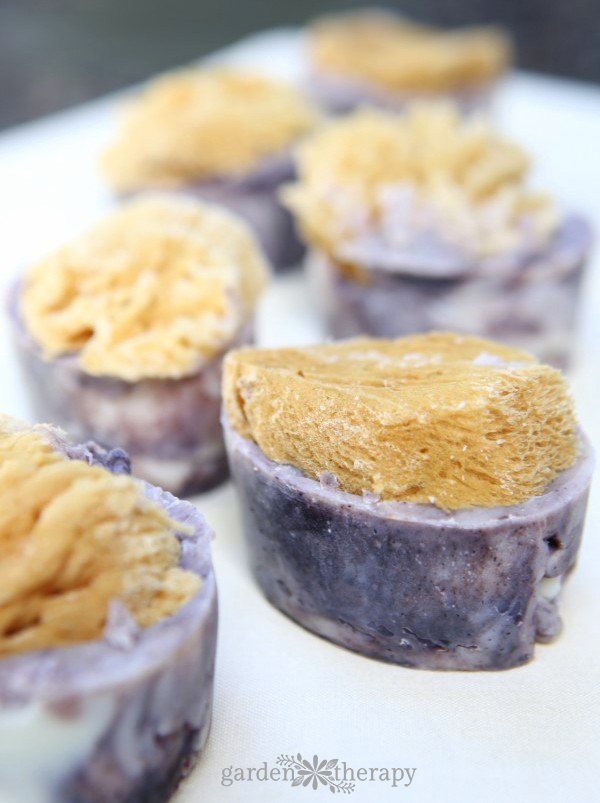
Topping bars of soap with sea sponges makes for nice gifts. Be sure to make plenty and keep a few bars for yourself, as the sponges create a luxurious lather that is heavenly to wash with!
This soap tutorial comes from Good Clean Fun: THE Idea Book for Creative Melt and Pour Soap Projects. You’ll discover the basics of soapmaking and find plenty more fun, easy artisan-inspired soap recipes to try. You can learn more about Good Clean Fun here.
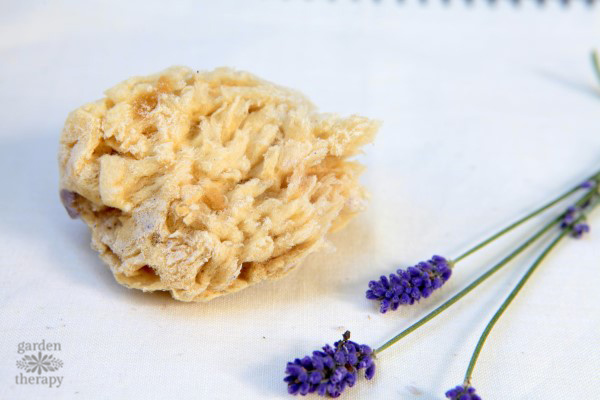
About Sea Sponges
There are over 5,000 varieties of sea sponges, only a few of which are harvested for commercial use. Sea sponge varieties range in size from less than 1 inch to 6 feet long! The soft, squeezable objects that we recognize as sea sponges are actually the soft inner part of the sea sponge. In nature, they are covered with a hard protective layer.
Sea sponges are harvested carefully, by hand, by “sponge fishermen” (and sponge fisherwomen). These folks dive down to where the sponges are growing and carefully cut them at least an inch from the base.
This allows the sponge to regenerate after being harvested, and, in fact, it will come back larger and healthier than before. There is no need for concerns about sustainability when it comes to the harvest of sea sponges, as the process actually encourages healthy regrowth and increases population density.
Sea sponges are not just useful to people; dolphins use them too! Dolphins have been known to carry sea sponges in their beaks while looking for food along the ocean floor. The sponges act as a combination filter/shield that protects the dolphin from sharp rocks, urchins, and other objects that could hurt it.
Sea Sponge Soap
You can make sea sponge soap with either cold process handmade soap or melt and pour soap. The instructions for melt and pour soap are below, but you can follow the instructions for making cold process soap, and then scent it with lavender essential oil and colour it with swirls of ratanjot to get a similar-looking soap. Follow the same instructions for the sea sponges!
Materials
- 8 natural sea sponges
- Oval silicone soap mold
- Lavender essential oil
- Ratanjot (for colour)
Make It!
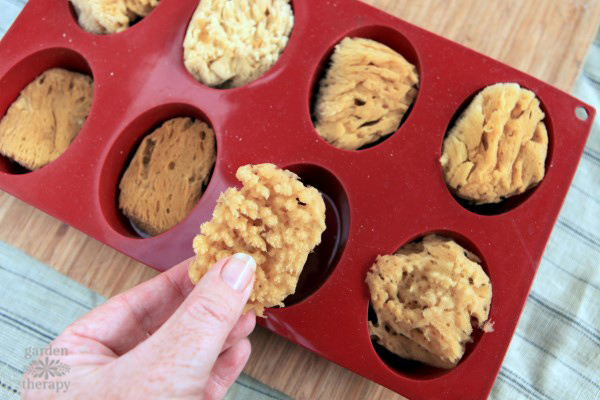
It’s best to cut your sea sponges to size before you make your soap. Adding the sea sponges has to be done very quickly, as the soap sets quite fast once it hits the mould.
Use a sharp knife to cut your soap base into one-inch cubes or smaller. Put the cubes in a heatproof container and put that in the microwave.
Melt the soap base on medium-high heat in the microwave or double boiler.
Add lavender essential oil and scoop one-half cup of melted soap base to mix with the ratanjot or soap colour. Add the coloured soap back into the soap base and make three big swirls with a metal spoon, being careful not to over-stir it.
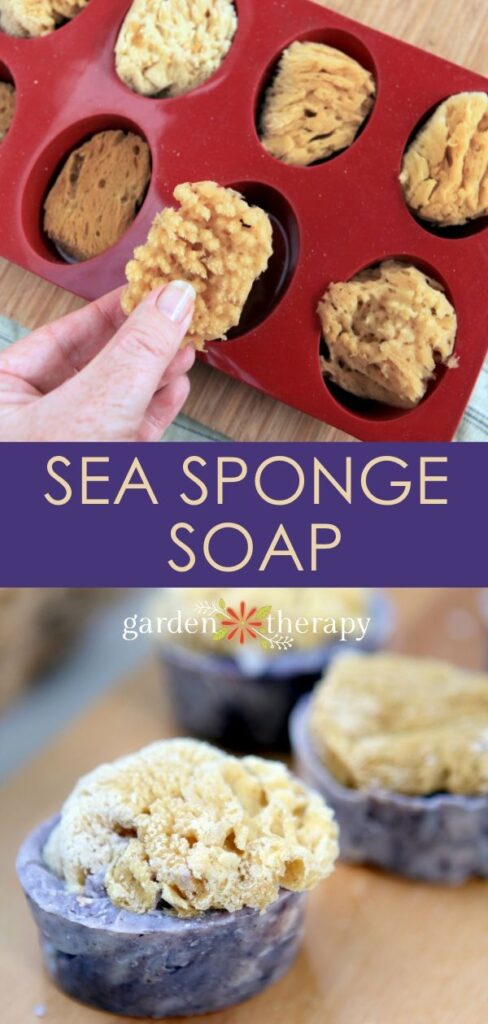
Pour the soap into each cup, leaving at least a quarter inch of headspace in each one, then gently press your sea sponge into the soap so that it sinks in and attaches.
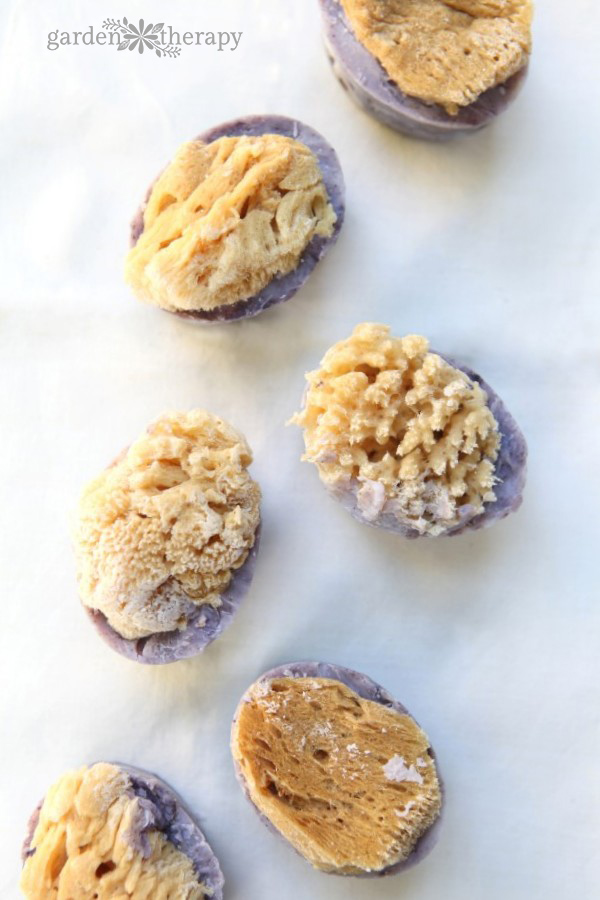
Allow the soap to cure until it’s ready to be removed from the mould.
When the soap is ready to be unmoulded, it can be wrapped up and given away as gifts, or lathered up as a luxurious treat for your own shower or bath.
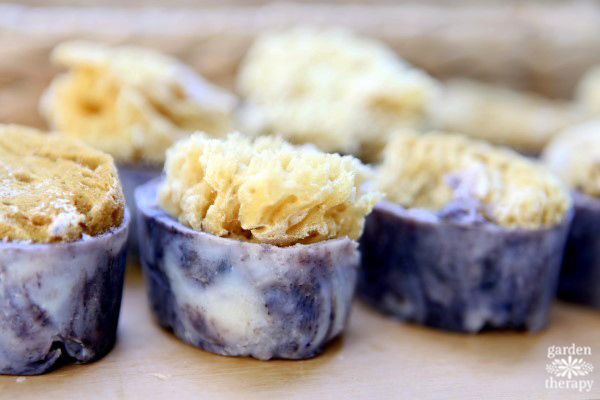
More Soap Recipes!
Here are some more recipes for making soap at home. I love to make soap, and I’m sure you will find a recipe or two that suits you here:
- Fresh and Woodsy Winter Forest Soap Recipe
- How to Make Soap: DIY Unscented Soap Recipe
- Budget-Friendly Soap Making With Lard Soap
- Gorgeous Lavender Oatmeal Soap Cupcakes (That Anyone Can Make)
- How to Make a Foaming Soap Dispenser + an All-Natural Foam Soap Recipe
- Gentle on the Skin Rose Soap Recipe

A city girl who learned to garden and it changed everything. Author, artist, Master Gardener. Better living through plants.

Where do I find sea sponges to make soap that are affordable?
Hi Angie, the link in the materials list shows 12 sea sponges for $10: https://amzn.to/2gmv5f0. I think that is pretty good, but you can also look at craft stores and Etsy.
Hi ! How do you do to swirl ?
Hi Melanie, at trace, I mix the powdered colour (ratanjot) with the soap at the edge of the bowl then use the spatula to pull the colour through just three times. Then pour into the moulds. Have fun!
If someone prefers not to use sea sponges for whatever reasons, maybe luffa can be a good replacement… and that can be grown in a garden!
indeed!https://gardentherapy.ca/luffa-gourds/